
A team of archaeologists in Peru has brought to light the remains of a 3,500-year-old city, offering new insights into the region’s pre-Columbian history and shedding light on early urban development in the Americas. This extraordinary discovery, located in the coastal desert region of northern Peru, is being hailed as one of the most significant archaeological finds in recent decades.
The old settlement, revealed after many years of meticulous digging, offers significant proof of intricate societal structures, architectural advancements, and ritualistic practices originating from a time preceding the emergence of more renowned Andean cultures, like the Moche or Inca. The location is thought to pertain to the ancient Casma–Sechin culture, among the initial communities in South America recognized for its grandiose architecture and elaborate ceremonial complexes.
Archaeologists leading the project describe the discovery as a window into the early formation of urban centers in the Americas, comparable in significance to ancient settlements in Mesopotamia, Egypt, or the Indus Valley. The newly unearthed city reveals the intricate planning and societal structure of a people whose history has long remained hidden beneath layers of sand and time.
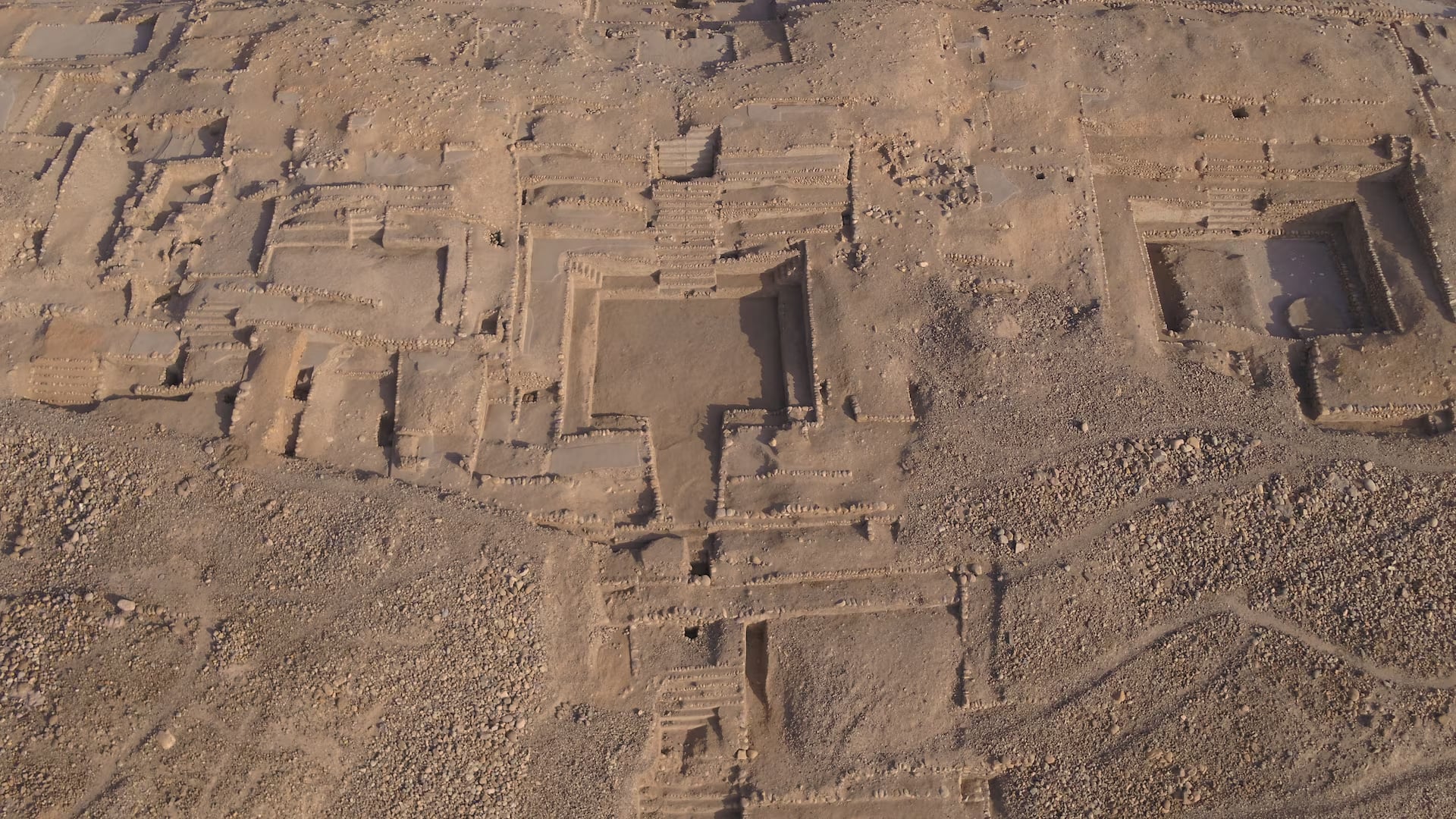
The city is distinguished by its impressive attributes such as large stone walls, ceremonial squares, elevated platforms, and living areas, all built using materials from the area. The design illustrates that the settlement served as a political and economic center, in addition to being a hub for spiritual and cultural functions. The architecture showcases a degree of planning and organization, indicating a central governing body and a coordinated workforce.
What makes this discovery particularly significant is the evidence of early urban planning. The presence of wide avenues, drainage systems, and carefully positioned buildings indicates that the inhabitants had developed sophisticated methods for managing both the natural environment and the social dynamics of city life. Such complexity challenges earlier assumptions that large-scale urbanization in the Americas occurred only with later civilizations.
The location also encompasses many ceremonial edifices embellished with elaborate engravings, featuring illustrations of gods, animals, and geometric motifs. These artistic features imply that spirituality was a key aspect of the society, potentially acting as the philosophical bond uniting the populace. Researchers have additionally discovered an assortment of ritual offerings, such as ceramics, lithic implements, and food remnants, which offer further insights into the everyday life and sacred practices of the city’s inhabitants.
Radiocarbon dating of materials from the site has confirmed the age of the settlement at approximately 3,500 years, placing it within the Late Preceramic or Initial Period of Andean prehistory. This era is characterized by the emergence of sedentary agricultural societies that began to develop monumental architecture and complex social hierarchies. The city’s size and layout suggest that it was home to thousands of people, making it one of the earliest known examples of large-scale urban living in the Americas.
The discovery is not only significant for its age and scale but also for the insight it provides into the development of early civilizations in a region that is often overshadowed by the more famous cultures of the high Andes. The Casma–Sechin culture, which flourished along Peru’s northern coast, is less well known internationally but has long been recognized by archaeologists for its monumental stone constructions and enigmatic iconography.
The location of the site is within an area that has undergone extensive archaeological study over the years. However, the recently discovered city’s astounding scope and preservation make it unique. Numerous buildings are extraordinarily well-preserved, having been safeguarded for thousands of years under the layers of desert sand. This remarkable preservation has enabled researchers to examine the initial design and architectural elements with outstanding precision.
Archaeologists are particularly excited about the potential to learn more about the daily lives of the city’s inhabitants. Preliminary excavations have revealed domestic spaces, storage areas, and evidence of food production, including remains of cultivated plants such as maize, beans, and squash. Animal bones suggest the consumption of both domesticated animals and marine resources, indicating a diverse and adaptable diet.
The discovery has also raised new questions about the relationship between different early cultures along the Peruvian coast. Researchers are now examining how this ancient city may have interacted with other nearby settlements, whether through trade, conflict, or cultural exchange. The site could hold important clues about the processes that led to the development of complex societies in ancient South America.
Local government bodies and heritage institutions are collaborating with archaeologists to safeguard and conserve the site. Considering the site’s potential for tourism and educational purposes, conversations have begun on how to manage public access while ensuring preservation. The government of Peru has shown firm backing for the current research, acknowledging the discovery as a significant component of the nation’s rich cultural heritage.
The team leading the excavation includes experts from Peruvian universities as well as international collaborators specializing in archaeology, anthropology, and conservation science. Their multidisciplinary approach combines traditional excavation techniques with modern technologies such as 3D scanning, drone mapping, and geophysical surveys. These tools are helping researchers create detailed models of the site while minimizing disturbance to fragile structures.
As excavation work continues, the team hopes to uncover more information about the social and political organization of the ancient city. Early findings suggest that the society may have been stratified, with elites occupying larger, more elaborate residences close to ceremonial centers, while common people lived in more modest dwellings on the periphery. Evidence of specialized craft production, including pottery and textile-making, hints at a diversified economy that supported artisans as well as farmers.
The religious life of the city is another area of intense interest. The ceremonial plazas and monumental platforms are believed to have served as stages for public rituals, festivals, and possibly astronomical observations. Some structures appear to align with celestial events, reflecting the importance of seasonal cycles in the agricultural calendar and spiritual life of the community.
One of the key challenges facing archaeologists is interpreting the symbolic meanings of the site’s carvings and artistic motifs. The iconography includes both human and animal figures, some of which may represent mythological beings or ancestors. Understanding these symbols could provide valuable insight into the belief systems and worldview of this ancient culture.
Este hallazgo ha sido comparado con otros centros urbanos antiguos en Perú, como Caral, otro sitio monumental precolombino situado más al sur. Aunque cada asentamiento tiene características particulares, en conjunto muestran que sociedades complejas prosperaban en las Américas mucho antes del surgimiento del Imperio Inca. Estos descubrimientos están llevando a los estudiosos a reconsiderar las cronologías y trayectorias de las civilizaciones tempranas en la región.
The global archaeological community has embraced the finding, highlighting its contribution to the increasing evidence that the Americas hosted some of the planet’s earliest and most inventive urban civilizations. The revelation of the 3,500-year-old city acts as a strong reminder that human creativity and social structuring have deep origins worldwide.
With fresh levels of excavation revealing more about this ancient city, archaeologists aim to solve long-standing mysteries concerning the organization of early societies in South America, their adaptations to difficult environments, and how they established the groundwork for later civilizations. Every artifact, structure, and symbol discovered provides researchers with valuable insights into the complex mosaic of human history that took place on the Peruvian coast thousands of years in the past.
The project is still ongoing, and scientists predict that additional digs could continue for several years, perhaps even decades. However, the preliminary results already provide an extraordinary view into a bygone era, reminding us that history still contains myriad tales to be uncovered beneath the ground.