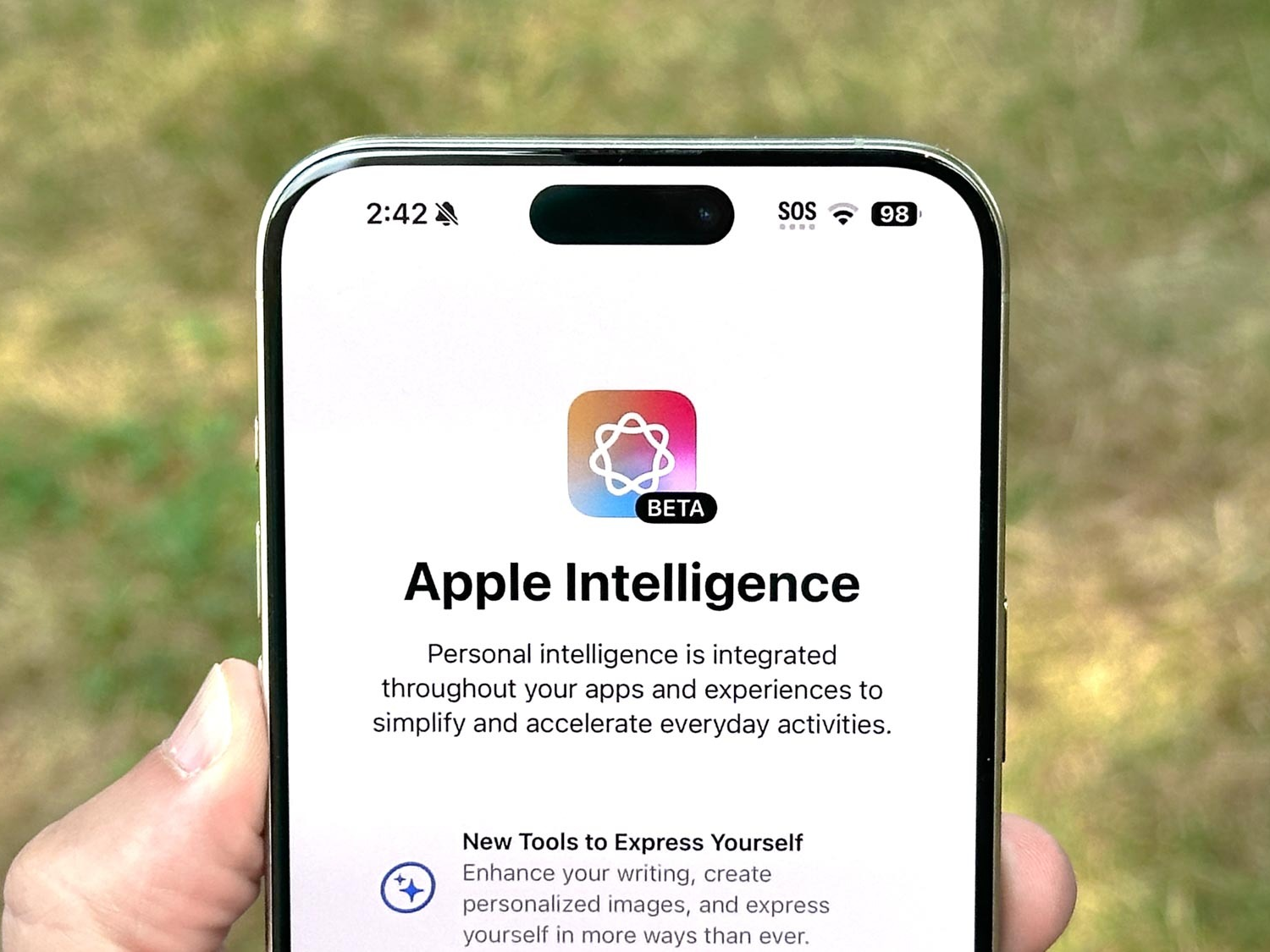
Apple’s decision to rely on Google’s Gemini artificial intelligence marks a pivotal shift in how the company plans to deliver advanced AI features to millions of users worldwide. Rather than waiting to perfect its own large-scale model, Apple is prioritizing speed, reliability, and user experience as it prepares a long-anticipated upgrade to Siri.
Apple confirmed that it will integrate Google’s Gemini AI model into the next generation of Siri, scheduled to arrive later this year. The announcement, made jointly by both companies, highlights a multi-year agreement that allows Apple to use Gemini alongside Google’s cloud infrastructure to support new artificial intelligence capabilities. For Apple, this partnership represents a strategic recalibration rather than a retreat: it signals a willingness to collaborate externally to meet growing expectations around AI-driven products.
A high-stakes alliance forged by pressing demands and broad scope
For years, Apple has prioritized crafting its own technological foundation, consistently opting for vertical integration rather than relying on outside partners. Yet this approach has been challenged by the swift rise of generative AI. As rivals have introduced chatbots, productivity platforms, and voice assistants driven by ever more advanced models, Apple’s advancement has seemed more restrained and gradual.
The refreshed iteration of Siri was initially showcased during Apple’s Worldwide Developers Conference in 2024, where the company presented its plan for a more natural, context-sensitive assistant. The rollout was subsequently postponed, triggering speculation that Apple had been finding it difficult to keep pace with competitors like Google, Microsoft, and OpenAI. By choosing Gemini as Siri’s primary engine, Apple intends to narrow that distance and introduce enhanced capabilities without incurring additional delays.
In a joint statement, the companies said Apple determined that Google’s AI technology offered the most capable foundation for Apple Foundation Models. The collaboration is designed to unlock new experiences while maintaining Apple’s longstanding emphasis on privacy and security. Under the agreement, Apple Intelligence features will continue to operate either directly on users’ devices or within a secure cloud environment, ensuring personal data remains protected.
How the deal sheds light on Apple’s AI aspirations
The partnership has reignited debate over whether Apple has fallen behind in artificial intelligence development. Unlike competitors that openly market AI as a central pillar of their platforms, Apple has historically integrated new technologies quietly, prioritizing stability and usability over rapid experimentation.
Depending on Gemini does not inherently signal a lack of capability; instead, it reflects a practical choice. Crafting a state-of-the-art large language model demands immense computational power, extensive datasets, and prolonged development cycles. By utilizing Google’s established infrastructure and research, Apple can devote its efforts to polishing the user experience, embedding AI more naturally within its ecosystem, and guaranteeing that new functionalities remain consistent with its design principles.
Apple has broadened its AI collaborations as well. Beyond integrating Gemini, the company has acknowledged that certain capabilities will rely on OpenAI’s ChatGPT. Even so, the Gemini deal positions Google’s system as a core element of Apple’s AI strategy, prompting uncertainty about how these various technologies will operate side by side within iOS and other environments. Apple has yet to explain how tasks will be distributed among the models, though its strategy points to adaptability rather than exclusivity.
Investors have broadly embraced the decision, and many analysts interpret the deal as clear proof that Apple is committed to advancing its AI‑focused services and hardware. Instead of holding back until an in‑house system is fully refined, the company is opting to deliver noticeable enhancements right away, a move that could help revive interest in its devices.
Implications for Google in the AI arms race
For Google, the deal marks a pivotal endorsement of Gemini at a crucial point in the AI race, reflecting the company’s substantial efforts to establish Gemini as a flexible, enterprise-grade model suited for tasks ranging from enriched search features to advanced productivity solutions. By bringing Apple on board as a long-term collaborator, Google boosts Gemini’s prominence and extends its presence across hundreds of millions of devices.
The agreement further highlights Google’s effort to integrate its AI technology into a wide array of platforms, including those beyond its direct oversight, and although Apple and Google remain strong rivals in fields like mobile operating systems and digital services, the partnership illustrates how AI is redefining long‑standing competitive lines across Silicon Valley.
Market reaction echoed this confidence as shares of both Apple and Google posted slight gains after the announcement, though the outcome proved especially significant for Google. The stock’s uptick temporarily lifted Google’s market capitalization past $4 trillion during intraday trading, positioning it within a select group of companies that have achieved that benchmark.
Siri’s ongoing evolution and what lies ahead for voice assistants
Siri emerged as one of the earliest mainstream voice assistants more than a decade ago, yet its features have frequently trailed behind newer competitors; many users have faulted it for uneven performance and limited conversational depth, particularly as generative AI has elevated expectations for more natural and fluid language interactions.
The integration of Gemini is expected to transform how Siri understands and responds to queries. Rather than relying primarily on scripted responses and predefined commands, the assistant will be able to generate more nuanced answers, maintain context over longer conversations, and assist with complex tasks. This evolution aligns with broader industry trends, where voice assistants are becoming gateways to AI-powered productivity rather than simple command tools.
Apple is betting that a smarter Siri will enhance the value of its ecosystem, encouraging users to upgrade devices and remain within its platform. After several challenging years for iPhone sales, driven by market saturation and economic uncertainty, AI features are increasingly viewed as a key differentiator.
Market confidence and financial outlook
The announcement’s timing is notable as Apple nears its upcoming earnings release, with analysts anticipating roughly 11% year-over-year growth in iPhone sales for the December quarter and overall profits expected to climb almost 8% to exceed $39 billion; although these numbers signal a rebound, long-term momentum will likely hinge on Apple’s capacity to deliver appealing feature upgrades that motivate consumers to replace their devices.
AI-powered services, featuring an upgraded Siri, play a pivotal role in that strategy. Investors view the Gemini partnership as a way to lower execution risks by helping Apple deliver competitive AI capabilities from the very beginning. According to one analyst, the agreement resolves long-standing uncertainties surrounding Apple’s AI roadmap and sheds light on how the company intends to advance its plans.
Although the financial specifics were not revealed, earlier reports indicated that Apple might spend around $1 billion each year to access Gemini, a cost that would remain feasible for a company of Apple’s scale if the integration boosts device sales and enhances customer loyalty.
User trust, personal autonomy, and safeguarding privacy
One of the most sensitive aspects of AI integration is data privacy, an area where Apple has built much of its brand reputation. The company emphasized that Apple Intelligence features powered by Gemini will adhere to its strict privacy standards. Processing will occur either on-device or within a secure cloud designed to minimize data exposure.
This strategy sets Apple apart from rivals that depend primarily on centralized cloud computing, as it preserves tighter oversight of how AI handles personal information and aims to assure users that enhanced capabilities do not compromise their privacy.
Balancing openness with ease of use will be a key challenge. With several AI models working in the background, users may seek a clearer understanding of how their data is managed and which technologies take part. How well Apple conveys this information could shape how the public views the partnership.
A broader shift in the technology landscape
The Apple–Google agreement illustrates a wider evolution across the tech sector, where collaborative efforts increasingly stand alongside rivalry. As AI systems become more intricate and demanding in terms of resources, even major corporations are acknowledging the advantages of pooling infrastructure and specialized knowledge.
For Apple, partnering with Google does not diminish its identity as a product-focused company. Instead, it reinforces a pragmatic approach to innovation, one that prioritizes delivering polished experiences over owning every underlying component. For Google, the deal extends Gemini’s influence and reinforces its position as a leading AI provider.
As the updated Siri rolls out later this year, its performance will serve as a real-world test of this strategy. Success could redefine expectations for voice assistants and demonstrate how strategic partnerships can accelerate technological progress. Failure, on the other hand, would raise further questions about Apple’s ability to compete in an AI-driven future.
What is evident is that much is on the line. Artificial intelligence is swiftly emerging as a central force in consumer technology, transforming how individuals use devices, obtain information, and handle everyday responsibilities. By positioning Gemini at the core of Siri’s advancement, Apple is taking a bold step to maintain its relevance in the years ahead, indicating that cooperation rather than solitude could prove the most effective way forward.