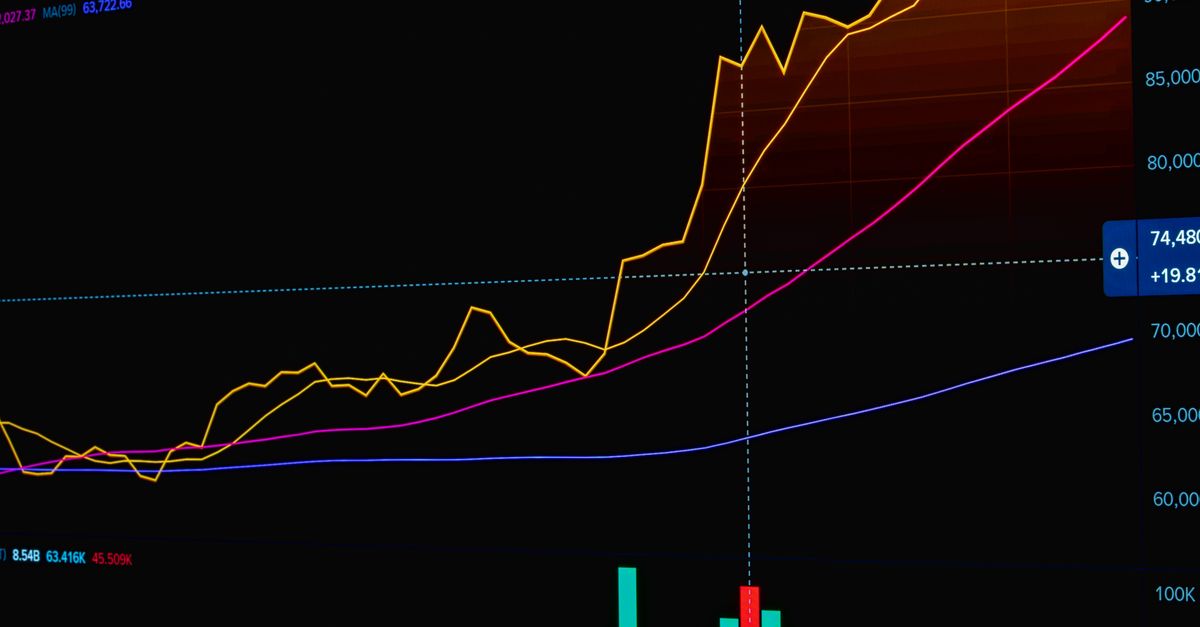
Howard Silverblatt launched his Wall Street career when the S&P 500 lingered under 100 points, and he concluded it as the index was nearing 7,000. Across nearly 49 years, he observed sweeping rallies, punishing downturns, and a profound evolution in how Americans approach investing and retirement savings. His insights deliver a rare, long-range view of risk, discipline, and lasting financial durability.
When Howard Silverblatt arrived for his first day in May 1977, the S&P 500 hovered at 99.77 points, and by the time he stepped into retirement in January after nearly fifty years at Standard & Poor’s—now S&P Dow Jones Indices—the index had surged to almost 7,000, marking a roughly seventyfold rise, while over that same period the Dow Jones Industrial Average moved from the 900 range to surpass 50,000 shortly after he left.
Such figures underscore the extraordinary long-term growth of U.S. equities. Yet Silverblatt’s career was anything but a straight upward line. As one of Wall Street’s most recognized market statisticians and analysts, he tracked corporate earnings, dividends, and index composition through oil shocks, recessions, financial crises, and technological revolutions. His tenure coincided with a profound expansion in data availability, trading speed, and investor participation.
Raised in Brooklyn, New York, Silverblatt developed an early affinity for numbers, influenced in part by his father’s work as a tax accountant. After graduating from Syracuse University, he joined S&P’s training program in Manhattan in the late 1970s. He would remain with the organization for his entire professional life, building a reputation as a meticulous interpreter of market data and a reliable source for journalists and investors seeking context during turbulent periods.
Grasping risk tolerance amid an evolving investment environment
Investors repeatedly hear Silverblatt emphasize a clear yet often overlooked principle: they should grasp the nature of their holdings and stay aware of the associated risks. The current investment landscape differs greatly from that of the 1970s. Although the roster of publicly listed firms has gradually shrunk, the assortment of available financial instruments has expanded sharply. Exchange-traded funds, intricate derivatives, and algorithm-based approaches now enable capital to shift with extraordinary speed.
This expansion has broadened access while adding new layers of complexity. Investors are now able to tap into entire sectors, commodities, or global markets with a single click. Still, convenience does not erase risk. Silverblatt repeatedly stressed the need to understand one’s risk tolerance and liquidity requirements before committing capital.
Market milestones—such as recent record highs in major indices—should prompt reflection rather than complacency. When asset values rise significantly, portfolio allocations can drift away from their original targets. A balanced mix of equities, bonds, and other assets may become skewed toward stocks simply because equities outperformed. Periodic reviews help determine whether adjustments are necessary to maintain alignment with long-term objectives.
Silverblatt also warned that zeroing in only on point swings in major indexes can be misleading, noting that a 1,000‑point rise in the Dow at 50,000 amounts to just a 2% move, whereas decades ago, when the index hovered near 1,000, the same point jump would have equaled a full doubling. Looking at percentage shifts offers a more accurate sense of scale and volatility, particularly as overall index levels continue to grow.
Lessons from booms, crashes, and structural shifts
Over nearly fifty years, Silverblatt witnessed some of the most intense moments in financial history, with October 19, 1987—widely remembered as Black Monday—standing out most sharply. During that session, the S&P 500 plunged more than 20%, representing the most severe single-day percentage loss in the modern U.S. market era. For both analysts and investors, the collapse underscored how abruptly markets can tumble.
The 2008 financial crisis marked yet another pivotal period, as the failures of Lehman Brothers and Bear Stearns undermined trust in the global financial system and set off a deep recession. Silverblatt observed dividend reductions, shrinking earnings, and index adjustments while markets staggered. The experience strengthened his long-standing view that safeguarding capital in turbulent times can outweigh the pursuit of peak returns during exuberant markets.
Technological transformation has been another hallmark of his career. When Silverblatt began, market data circulated far more slowly, and trading was less accessible to individual investors. Over time, advances in computing, telecommunications, and online brokerage platforms revolutionized participation. Today, trillion-dollar market capitalizations are no longer rare. Of the ten U.S. companies valued above $1 trillion in recent years, the majority belong to the technology sector—a reflection of the economy’s digital pivot.
These structural shifts have reshaped index makeup and influenced how investors operate. Technology companies now wield considerable impact on benchmark performance. At the same time, the expansion of passive investing and index funds has redirected capital in ways that would have seemed unimaginable in the late 1970s. From Silverblatt’s perspective, these developments transformed not only overall returns but also the very mechanics of the market.
Although these shifts have unfolded over time, one consistent pattern persists: markets generally trend upward across extended periods, even as they experience occasional pullbacks and bear phases. This combination of long-range expansion and near-term turbulence underpins Silverblatt’s philosophy. Investors are urged to expect both dynamics rather than react with surprise when declines occur.
The increasing burden carried by individual retirement savers
Another profound shift during Silverblatt’s career has been the evolution of retirement planning. In earlier decades, many workers relied on defined-benefit pensions that guaranteed a set income in retirement. Silverblatt himself will receive such a pension alongside his 401(k). However, the prevalence of traditional pensions has declined sharply.
Today, defined-contribution plans like 401(k)s and individual retirement accounts assign individuals greater responsibility for handling their investments, a change that provides more freedom and can deliver strong gains during favorable markets while also leaving savers more vulnerable to market volatility.”
Recent data from the Federal Reserve indicate that direct and indirect stock holdings—including mutual funds and retirement accounts—represent a record share of household financial assets. This increased exposure amplifies the importance of understanding risk. Market downturns can materially affect retirement timelines and income projections if portfolios are not constructed with appropriate diversification and time horizons in mind.
Silverblatt’s perspective underscores that risk is not an abstract concept. It is the possibility of loss at precisely the moment when funds may be needed. While rising markets generate optimism, prudent planning requires considering adverse scenarios as well. Diversification, asset allocation, and realistic expectations form the backbone of sustainable retirement strategies.
Curiosity, discipline, and a world beyond the trading floor
Silverblatt’s long career in a demanding arena also stems from his intellectual curiosity. From sorting checks during childhood to captaining his school’s chess team, he developed analytical habits early on. Mathematics was the subject in which he excelled most, and he jokingly referred to himself as a “double geek,” combining a passion for numbers with the competitive drive of a chess player.
As he moves into retirement, Silverblatt expects to spend far more time immersed in reading, even delving into the writings of William Shakespeare. He also plans to engage in additional chess games, join conversations at his neighborhood economics club, and perhaps try out fresh pastimes like golf. While he foresees occasionally supporting friends with market-focused initiatives, he has emphasized that the era of 60-hour workweeks is firmly behind him.
His post-career outlook conveys a wider insight: professional drive thrives when counterbalanced. Achieving long-term excellence demands not only technical mastery but also adaptable thinking and pursuits beyond work. For Silverblatt, chess honed his strategic focus, while literature granted a broader viewpoint that reached past raw numerical analysis.
The arc of his career mirrors the trajectory of modern American investing. From a time when the S&P 500 had yet to reach triple digits to an era defined by trillion-dollar technology giants and digital trading platforms, Silverblatt observed firsthand how markets evolve. Yet his core principles remain steady: know what you own, measure risk carefully, focus on percentages rather than headlines, and prepare emotionally and financially for inevitable downturns.
As the Dow breaks through milestones once thought out of reach, Silverblatt’s background provides valuable perspective, since index figures alone never convey the entire picture and what truly counts is the way people move through cycles of confidence and anxiety; viewed this way, almost fifty years of data suggest a lasting truth: patience fuels long-term expansion, yet enduring financial stability hinges on how one withstands periods of decline.