Avatar photo

Joseph Taylor

1750 Posts
Ranking of the best cities to live in Panama

Finding Your Home: Top Cities in Panama

The best cities to live in Panama stand out for offering a high quality of life, access to modern amenities, and a strategic location within the country. Among the most highly recommended are Panama City, for its urban development and opportunities; David, for its balance between growth and tranquility; Boquete, for its natural surroundings; and Coronado, for its seaside lifestyle.Within the capital, interest in living in well-connected areas has driven the development of new residential projects. Projects such as Armonía Cinta Costera are just one example of how the Panamanian real estate market is creating spaces designed to enjoy city…
Read More
Caracas, in Venezuela: What signals operational resilience in volatile demand environments

Caracas, Venezuela: Operational Resilience in Volatile Demand

Caracas operates inside one of the most volatile economic and political contexts in recent history. For organizations working there — retailers, healthcare providers, logistics operators, utilities, NGOs — success depends less on perfect forecasting and more on observable signals that operational resilience is functioning under rapidly changing demand. This article identifies those signals, explains why they matter, and gives concrete examples, data-informed indicators, and pragmatic actions that managers can use to monitor and strengthen resilience.Contextual backgroundCaracas is the political and commercial heart of Venezuela, concentrating a large share of the country’s population, skilled labor, and consumption. Over the last decade…
Read More
Cabo Verde: CSR cases strengthening the blue economy and sustainable coastal jobs

Cabo Verde: CSR for Blue Economy & Coastal Jobs

Cabo Verde’s island-based economy has long been tied to the ocean, with limited land, a maritime exclusive economic zone far exceeding its territory, and a tourism-driven development model that place exceptional weight on coastal and marine activities for national income. Corporate social responsibility (CSR) that intentionally aligns corporate initiatives with blue economy priorities can help safeguard marine ecosystems while fostering durable coastal employment. This article presents the economic backdrop, key challenges, CSR frameworks that yield demonstrable results, illustrative case approaches with outcomes and indicative data, and recommendations for expanding resilient coastal job creation.Economic context and strategic importanceMacroeconomic role: Tourism is…
Read More
Philippines: CSR strengthening disaster preparedness and neighborhood resilience

CSR in the Philippines: A Catalyst for Disaster Preparedness & Community Resilience

The Philippines faces a high and growing frequency of natural hazards: tropical cyclones, storm surges, floods, landslides, earthquakes, volcanic eruptions, and sea level rise. On average, about 20 tropical cyclones enter the Philippine Area of Responsibility each year and roughly five make landfall. Recurrent major events—most notably Typhoon Haiyan (2013), which affected millions and produced economic losses in the billions of dollars—have underscored the need for robust disaster risk reduction (DRR) and community resilience. Corporations operating in the Philippines are increasingly integrating corporate social responsibility (CSR) with disaster preparedness and neighborhood resilience efforts, moving beyond one-off relief to invest in…
Read More
Cyprus: tourism CSR promoting water efficiency and living cultural heritage

Cyprus Tourism’s Commitment: Water Efficiency & Heritage

Cyprus is a Mediterranean island with a tourism-dependent economy and a rich reservoir of living cultural heritage. Coastal resorts, mountain villages, archaeological parks, seasonal festivals, traditional crafts, and culinary customs form the tourism offer. At the same time, Cyprus faces chronic water stress driven by low and variable rainfall, population peaks during the tourist season, and climate warming. For tourism businesses and destinations, corporate social responsibility (CSR) that simultaneously promotes water efficiency and safeguards living cultural heritage is not only ethically sound but also economically strategic.Water dynamics and tourism-related effectsWater scarcity profile: Cyprus has a semi-arid Mediterranean climate with large…
Read More
How do firms manage culture during rapid scaling or restructuring?

Restructuring: Navigating Cultural Shifts

Organizational culture is the shared set of values, behaviors, norms, and assumptions that guide how work gets done. During rapid scaling or restructuring, culture is placed under intense pressure. Headcount grows quickly, reporting lines shift, and processes are redesigned. If culture is not actively managed, it often becomes fragmented, inconsistent, or misaligned with strategy.Companies that succeed during such periods treat culture as a fundamental operating system rather than a loosely defined concept, recognizing that it accelerates execution, strengthens employee commitment, shapes customer interactions, and supports long-term performance.Why Culture Often Becomes Fragile Amid Organizational Growth and Structural ShiftsRapid growth or a…
Read More
What trends are shaping blockchain scalability without sacrificing security?

Future of Blockchain: Scalability & Security

Blockchain scalability has long been limited by the so‑called trilemma, which challenges networks to balance decentralization, security, and scalability simultaneously. Early blockchains emphasized decentralization and security, but that focus constrained their transaction capacity and drove up fees whenever demand surged. Recent advances, however, indicate that greater scalability no longer has to undermine security. Emerging architectural, cryptographic, and economic approaches are redefining how blockchains expand while maintaining their core trust assurances.Layer 2 Technologies Evolving into Essential InfrastructureOne of the most impactful developments involves the continued evolution of Layer 2 scaling solutions. Rather than adding extra pressure to the primary blockchain, these…
Read More
Why is biodegradable materials research gaining commercial interest?

The Commercial Rise of Biodegradable Materials Research

Biodegradable materials research has evolved from a niche academic pursuit into a strategically important commercial discipline, as firms in packaging, consumer goods, agriculture, construction, and healthcare increasingly fund materials designed to break down safely at the end of their lifespan, propelled by intersecting forces such as regulatory requirements, shifting consumer expectations, technological advances, and growing economic feasibility.Rising Challenges in Environmental Stewardship and Waste HandlingGlobal waste generation continues to rise, while traditional plastics persist in landfills and ecosystems for decades. Municipalities face growing disposal costs, and contamination of soil and water has become a reputational and legal risk for brands. Biodegradable…
Read More
How are quantum sensors impacting navigation and medical imaging research?

How Quantum Sensors Revolutionize Navigation & Medicine

Quantum sensors are instruments that harness quantum behaviors like superposition, entanglement, and coherence to register exceptionally subtle variations in physical parameters, and they differ from classical devices, which face restrictions from thermal noise and material limits, by achieving sensitivities near fundamental physical thresholds, a capability that is transforming fields such as navigation and medical imaging by making formerly unattainable measurements feasible.Impact on Navigation ResearchNavigation systems traditionally rely on satellite signals, gyroscopes, and accelerometers. These methods work well under normal conditions but degrade in environments where satellite access is denied or signals are distorted, such as underwater, underground, or in dense…
Read More
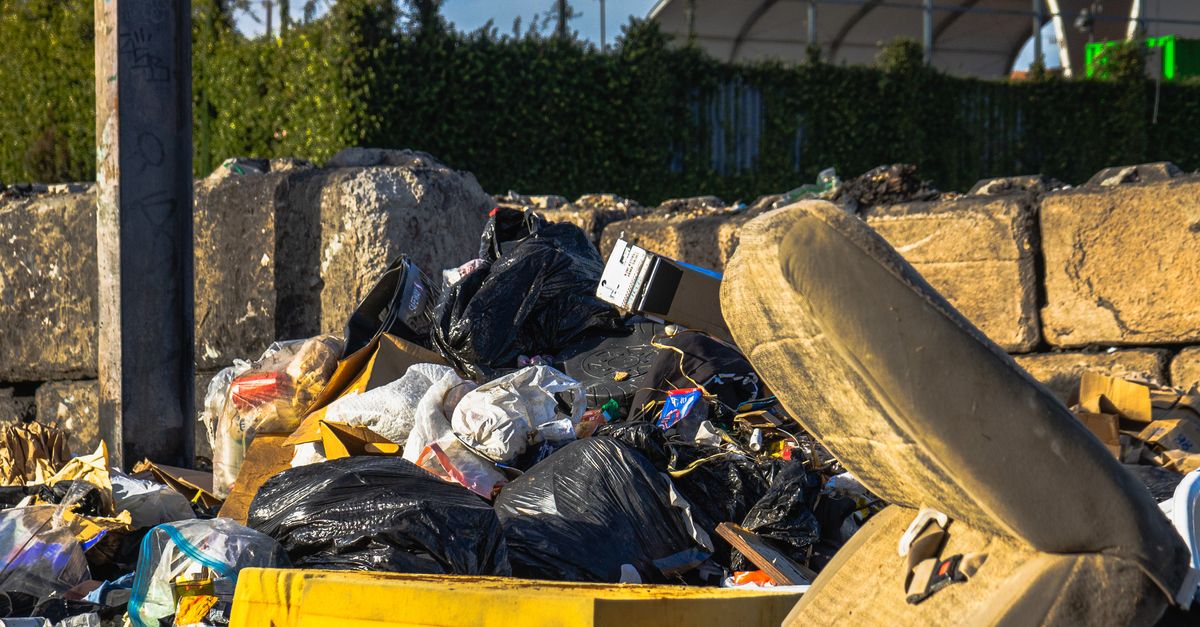
Why recycling alone won’t solve plastic pollution

Why recycling alone won’t solve plastic pollution

Plastic recycling is often depicted as a catch‑all solution to plastic pollution, but the reality is considerably more complex. Although recycling provides significant benefits, it cannot by itself eradicate plastic waste because of technical, economic, behavioral, and systemic limitations. This article examines these constraints, offers relevant evidence and illustrations, and underscores complementary strategies that must accompany recycling to create lasting change.Today’s scale: exploring how production, waste, and the true effects of recycling come togetherGlobal plastic production has grown to well over 350 million metric tons per year in recent years. A landmark analysis of historical production and waste found that,…
Read More