

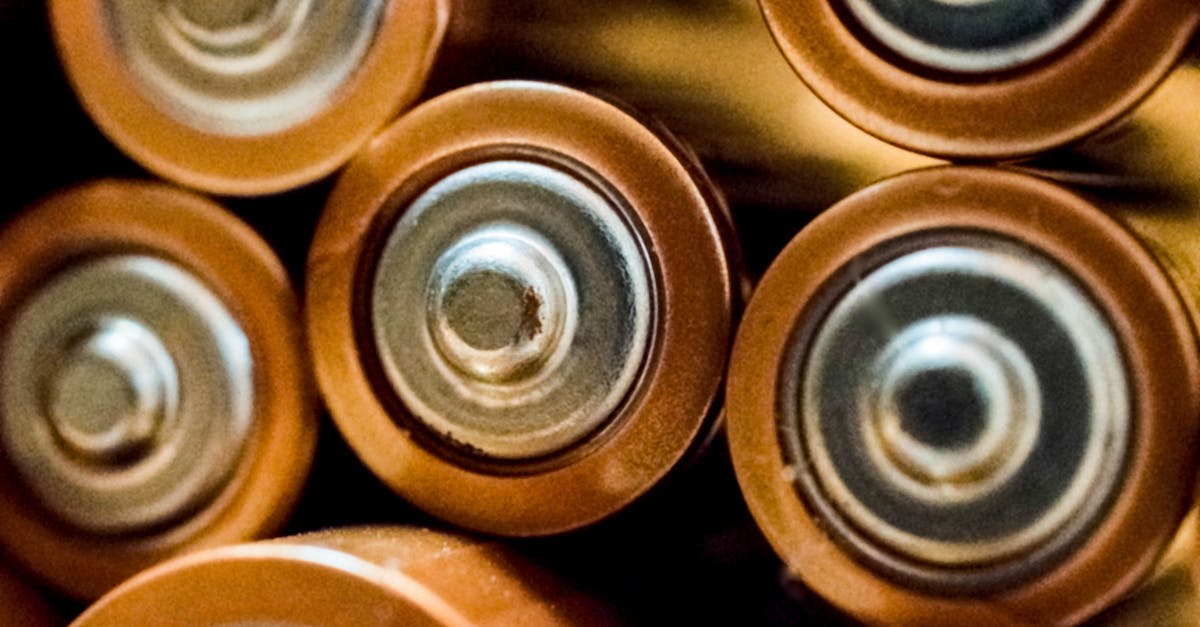
Battery performance drives the evolution of electric vehicles, renewable energy storage systems, consumer electronics, and overall grid robustness, and two key measures shape this advancement: energy density, indicating how much energy a battery holds relative to its mass or size, and cycle life, reflecting the number of charge and discharge repetitions a battery withstands before marked decline, and breakthroughs that raise both metrics are speeding up electrification while cutting long‑term expenses and reducing environmental impact.
Advanced Cathode Materials Driving Higher Energy Density
Cathodes play a central role in defining a battery’s energy density, and recent advances aim to boost the volume of lithium that can be reversibly stored while preserving the material’s structural integrity.
- High-nickel layered oxides (including materials like NMC 811 and more advanced variants) lower cobalt usage while elevating capacity, allowing electric vehicle cells to surpass 250 Wh per kilogram.
- Lithium-rich cathodes incorporate surplus lithium within their crystal lattice to reach higher theoretical capacities, delivering potential improvements of 20–30 percent compared with traditional formulations.
- Polyanion and disordered rock-salt cathodes offer enhanced thermal resilience and extended cycling performance, making them especially suitable for stationary energy storage applications where safety and longevity take precedence over compact design.
Silicon and Lithium Metal Anodes for Breakthrough Capacity
The anode is another major lever for improving energy density.
- Silicon-based anodes can accommodate nearly ten times more lithium than traditional graphite, and emerging approaches like nano-engineered silicon, silicon–carbon blends, and flexible binders help limit expansion-induced strain, enabling commercial cells to move from a few hundred cycles to well beyond one thousand.
- Lithium metal anodes deliver the maximum achievable energy density, particularly when combined with solid-state electrolytes, and recent progress in electrolyte chemistry and surface treatments helps restrain dendrite growth, which has long hindered extended cycling.
Solid-State Electrolytes Enhancing Safety and Longevity
Replacing liquid electrolytes with solid materials is one of the most transformative trends in battery research.
- Solid polymer electrolytes offer flexibility and compatibility with existing manufacturing, while reducing leakage and flammability risks.
- Ceramic and sulfide-based electrolytes enable higher voltage operation and improved thermal stability, which directly supports higher energy density and longer cycle life.
- By preventing unwanted side reactions at electrode interfaces, solid-state designs can maintain capacity over thousands of cycles.
Interface Engineering and Electrolyte Additive Innovations
Even minor chemical tweaks can deliver substantial improvements in performance.
- Electrolyte additives create durable protective films on electrodes, often referred to as solid electrolyte interphases, which slow degradation and extend cycle life by curbing ongoing chemical reactions.
- Artificial interphases and coatings placed on anodes and cathodes enhance both mechanical integrity and chemical resilience, particularly within high-voltage cell designs.
- Advanced interface engineering has allowed certain lithium-ion batteries to maintain more than 80 percent of their capacity even after surpassing 2,000 cycles in rigorous operating conditions.
Advances in Manufacturing and Optimized Battery Design
Improvements are not limited to chemistry; manufacturing plays a critical role.
- Dry electrode processing reduces the need for solvents, enabling thicker electrodes that increase energy density while lowering production costs.
- Cell-to-pack and cell-to-chassis designs eliminate redundant structural components, allowing more active material per vehicle and effectively increasing system-level energy density by 10–20 percent.
- Precision coating and quality control reduce defect rates, which directly improves cycle life and reliability.
AI-Enabled and Data-Informed Battery Innovation
Digital tools are accelerating innovation cycles.
- Machine learning models estimate how materials behave and deteriorate, trimming the time required to advance new chemistries.
- Smart battery management systems fine-tune charging strategies on the fly, easing strain on cells and extending effective lifespan by hundreds of cycles.
- Predictive analytics enable operators to schedule maintenance and replacements more efficiently, enhancing lifetime value for grid and fleet deployments.
Advanced Battery Chemistries Extending Beyond Traditional Lithium-Ion
Looking ahead, alternative chemistries promise further gains.
- Lithium-sulfur batteries provide a remarkably high theoretical energy density, with current studies aiming to curb polysulfide shuttling to improve their overall cycling durability.
- Sodium-ion batteries sacrifice some energy density in exchange for reduced costs and enhanced longevity, which makes them well-suited for extensive stationary storage applications.
- Multivalent systems, including magnesium or calcium batteries, are under investigation due to their promising durability and the plentiful availability of their constituent resources.
Balancing Performance, Durability, and Scale
Progress in battery energy density and cycle life is not driven by a single breakthrough but by a convergence of materials science, manufacturing innovation, and intelligent system design. Each improvement, from nano-engineered electrodes to data-driven management, incrementally reshapes what batteries can deliver over years of use. As these technologies mature and intersect, batteries are evolving from consumable components into long-lived infrastructure, quietly redefining mobility, energy security, and the practical limits of electrification.