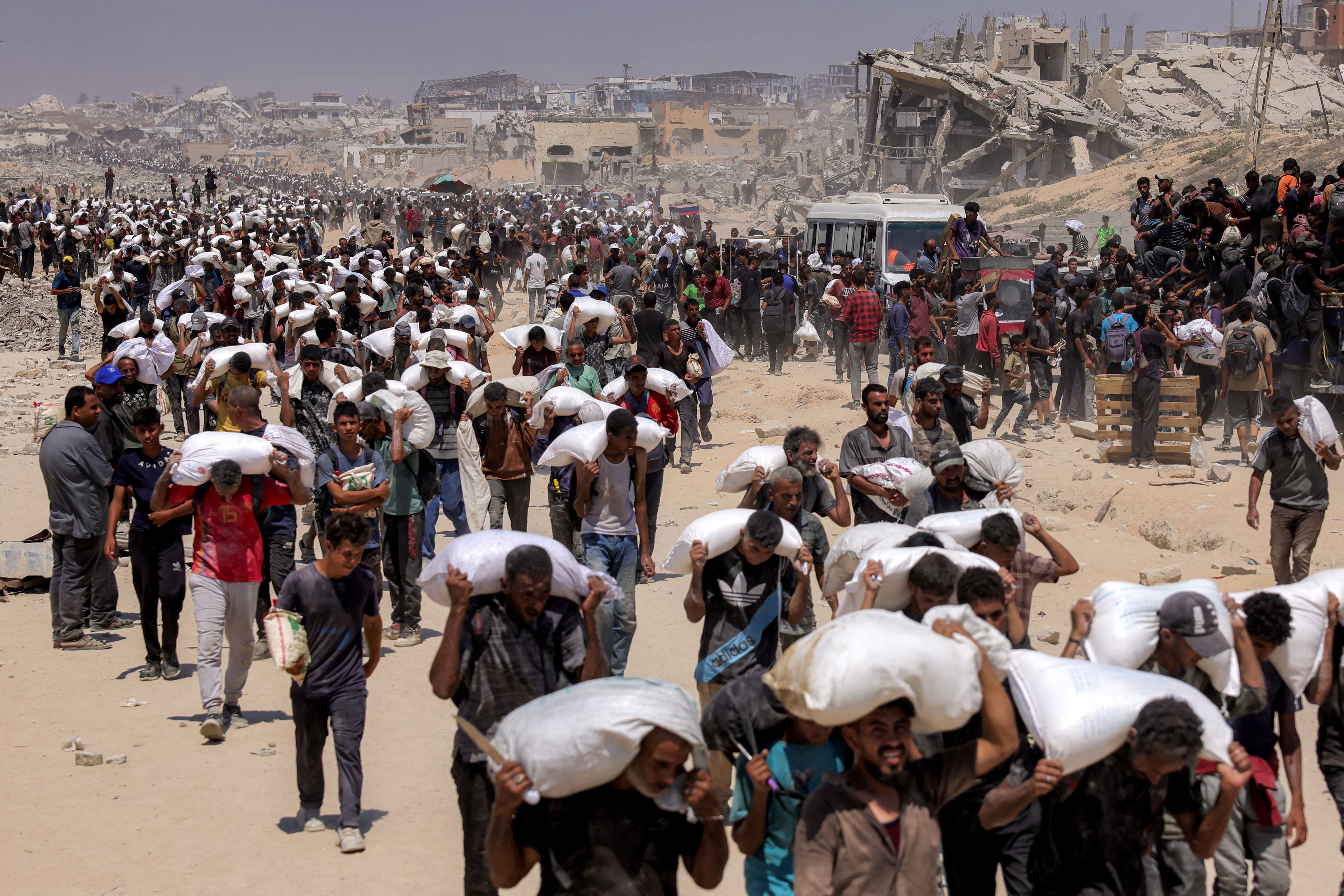
During ongoing unrest and violence, local armed factions in Gaza have assumed a more complex and contentious role: ensuring the passage of humanitarian aid into a region engulfed by crisis. Although their presence stems from the necessity for security in a divided and unstable setting, it also underscores the difficulties of providing aid in regions where conventional governance systems have deteriorated.
While assistance supplies thread their way through constrained and often attacked entryways, the duty of guaranteeing their secure delivery and allocation frequently lies not with formal entities, but with regional groups. These armed factions, functioning within an environment of profound suspicion and political division, are now significantly involved in the relief logistics—accompanying convoys, protecting storage locations, and overseeing checkpoints.
Nevertheless, this progression is not free from dispute. Although some people believe these organizations are addressing an essential gap, others worry about the consequences of armed entities managing the provision of fundamental humanitarian services. The combination of assistance and militarized frameworks forms a complicated network of interests, potentially affecting the impartiality and clarity of humanitarian activities.
The collapse of public order in parts of Gaza has made it extremely difficult for conventional aid organizations to operate effectively. Warehouses have been looted, supply convoys attacked, and aid workers threatened or obstructed. In such an environment, the emergence of local armed protectors has been described by some as a pragmatic response to a security vacuum.
Many of these groups claim their actions are driven by a desire to ensure that food, medicine, and shelter reach civilians in desperate need. They often cooperate with local communities and informal networks to establish order in the distribution process. In areas where trust in formal institutions has been severely diminished, this grassroots coordination can be the only functioning system of aid delivery.
But the line between protection and control can be thin. Reports have emerged suggesting that some groups may be selectively distributing aid based on loyalty or affiliation, undermining the principle of impartiality that is central to humanitarian work. The lack of independent oversight in many areas makes it difficult to verify these claims, yet the risk of politicizing aid is a persistent concern.
International relief organizations, already facing constraints due to logistical complications and limited funding, encounter further difficulties when dealing with armed groups. Gaining access often involves delicate negotiations, and even with agreements in place, there is no assurance that aid will be distributed without obstacles.
Attempts to collaborate with these groups have yielded varied outcomes. Several humanitarian organizations have successfully established partnerships that enable fairly safe entry to impacted communities. Conversely, others have fully ceased operations in specific areas, referencing intolerable risks to personnel or worries about misuse of aid.
Meanwhile, the civilian population bears the brunt of the dysfunction. In overcrowded shelters and damaged neighborhoods, people wait for hours or even days in hopes of receiving limited supplies. The reliance on armed escorts is a visible reminder of the breakdown of civil infrastructure and the ongoing insecurity that defines daily life in Gaza.
The role of armed groups in securing aid also raises larger questions about the long-term future of humanitarian efforts in conflict zones. When non-state actors become central to the delivery of assistance, the boundaries between relief, politics, and conflict become blurred. This dynamic not only complicates the mission of aid agencies but can also influence local power structures, sometimes reinforcing the influence of groups with limited accountability.
From a policy perspective, these developments underscore the need for more sustainable and inclusive strategies to rebuild governance and trust in crisis-affected regions. While emergency aid remains essential, it cannot substitute for stable institutions and equitable social services. Ultimately, the goal should be to create conditions in which humanitarian assistance can be delivered transparently, safely, and without armed intervention.
As tensions continue to flare, and with no immediate resolution to the conflict in sight, the role of armed groups in managing aid flows will likely remain a defining feature of the humanitarian landscape in Gaza. It is a reflection of both the resilience of local actors and the fragility of a system under immense pressure.
In the face of such complexities, the international community is tasked with supporting efforts that prioritize civilian protection, uphold humanitarian principles, and work toward restoring the foundations of a functional society. This includes not only the physical reconstruction of infrastructure, but also the rebuilding of trust, legitimacy, and the rule of law—elements that are essential for any meaningful and lasting recovery.