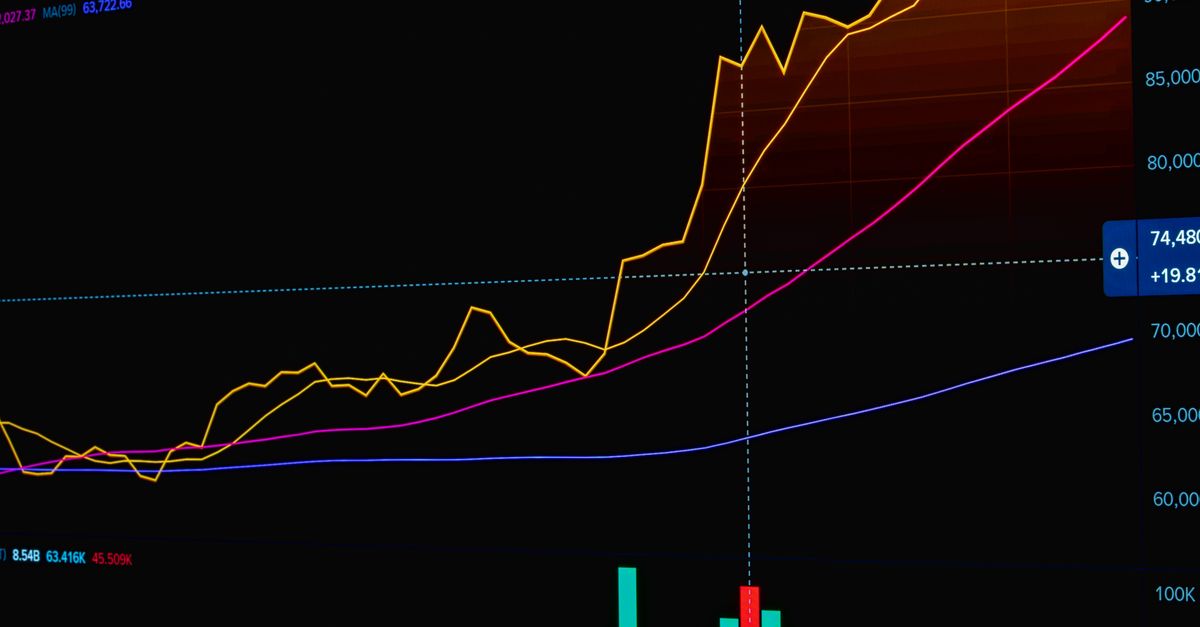
Oil markets surged on Monday after the United States and Israel executed coordinated strikes on Iran, intensifying worries about a wider Middle East conflict and potential disruptions to global energy flows.
Markets respond as tensions escalate in the Middle East
US crude futures rose 7.5% in early trading, while Brent crude, the international benchmark, spiked 6.2%, briefly surpassing $82 per barrel before settling around $77. This surge follows weeks of speculation about potential military action, which had already nudged oil prices higher in anticipation of conflict.
Meanwhile, stock futures for major indices tumbled. The S&P 500, Nasdaq, and Dow Jones all declined more than 1% in pre-market trading. Energy and defense companies, however, saw gains. Shares of ExxonMobil and Chevron climbed as rising oil prices promise higher profit margins, while defense contractors including Lockheed Martin and Northrop Grumman experienced strong pre-market growth.
Although market tension is evident, many traders expect any interruption to oil supplies to be brief. Still, uncertainty lingers regarding the extent and length of the military action, as US officials caution that the conflict might continue for several weeks. Analysts warn that a drawn-out hit to production, key shipping routes, or broader regional stability could drive crude prices toward $100 per barrel, triggering swift impacts on gasoline costs worldwide.
Iran’s pivotal position within the global oil landscape
Iran is a major player in the international oil market, holding the world’s third-largest proven oil reserves and exporting significant volumes to energy-hungry nations, particularly China. The country also controls key shipping routes that carry crude from the Gulf to global markets, making it a strategic hub in the supply chain.
Although OPEC and its allies, collectively known as OPEC+, announced plans to increase daily output by 206,000 barrels earlier this year, energy analysts note that any substantial disruption originating from Iran could easily outweigh such incremental supply boosts. In short, geopolitical instability in the region tends to dominate market behavior, often triggering immediate price spikes regardless of production adjustments.
Maritime risks across the Strait of Hormuz
A primary issue for traders involves the Strait of Hormuz, the narrow passage along Iran’s southern shoreline that functions as the principal route for oil shipments from nations such as Saudi Arabia and Kuwait. Close to 20 million barrels—nearly one-fifth of global daily oil output—move through this critical corridor. The northern flank of the strait lies under Iran’s control, and the country has repeatedly hinted at shutting it down during periods of tension with Western nations.
Recent assaults and mounting threats have led shipping companies to steer clear of the area, effectively bringing passage through the strait to a standstill. Jorge Leon, head of geopolitical analysis at Rystad Energy, observed that the near-total halt in tanker movement is already propping up high global benchmark prices and may continue to fuel volatility until the strait is once again secure for navigation. Goldman Sachs analysts have earlier cautioned that if the disruption persists, crude prices could climb beyond $100 per barrel.
Influence on Asia and worldwide oil movements
Asian economies, including China and India, would face significant exposure if Iranian shipments were halted or if access to the Strait of Hormuz were lost, and any reduction in Iranian oil would likely spark a scramble for substitute sources, pushing global prices even higher. “Oil is a global, fungible commodity,” noted Clayton Seigle, a senior fellow at the Center for Strategic and International Studies. “Any disruption in one location reverberates across the world.”
Additional concerns focus on Saudi Arabia, whose facilities are critical to regional supply stability. The 2019 drone attack on the Abqaiq plant demonstrated how fragile some infrastructure is, with specialized equipment not easily replaced. Most recently, Saudi Arabia temporarily shut portions of its Ras Tanura refinery following a drone strike. While officials indicated production was not expected to be affected, such incidents highlight the vulnerability of critical infrastructure in the Gulf region.
Gasoline prices likely to rise
For consumers, the most immediate impact of rising crude prices will be at the pump. Iran is the sixth-largest oil producer in the world, and any sustained military conflict could push gasoline prices higher, contributing to inflation and affecting household budgets. Tom Kloza, a veteran oil analyst and advisor to Gulf Oil, estimated that wholesale gasoline futures could rise by as much as 25 cents per gallon, translating into incremental daily price increases until markets stabilize.
US gas prices, which had hovered near $3 per gallon after dropping to levels not seen since 2021, have become highly vulnerable to global turmoil, and a recurrence of last year’s jumps driven by regional unrest could wipe out recent improvements while undermining consumer confidence, as the Trump administration had once touted inexpensive fuel as a political success, yet the unfolding crisis now threatens to swiftly undo those gains.
Lessons from past conflicts
History provides clear clues about how swiftly oil markets can respond to instability in the Middle East, and recent events underline this pattern. During the Israel-Iran clashes last June, Brent crude registered its biggest one-day jump since March 2022. Prices climbed again once the US entered the situation more directly, only to drop sharply after a ceasefire was reached. According to market analysts, short-lived turbulence is unavoidable, but maintaining elevated prices hinges on how long the conflict persists and how severely essential infrastructure and shipping routes are disrupted.
Investors and policymakers are now monitoring developments to assess how the strikes may shape both near-term and long-range outcomes, as the interaction between military escalation, worldwide supply networks, and energy markets is poised to affect economic stability and geopolitical planning for months ahead.
As the conflict keeps evolving, oil prices are likely to stay unpredictable. Analysts note that even small disruptions in the Gulf can trigger significant repercussions across global markets because of the tightly linked energy supply chain. Businesses, governments, and consumers are compelled to face these shifting conditions, weighing risk control against economic pressures.
The situation underscores the fragility of global energy security and the sensitivity of markets to geopolitical events. While traders hope for a swift resolution, the potential for extended conflict in the region leaves prices, stocks, and consumer costs hanging in the balance. For now, market participants are bracing for continued fluctuations as the effects of military action ripple through global oil supply chains.