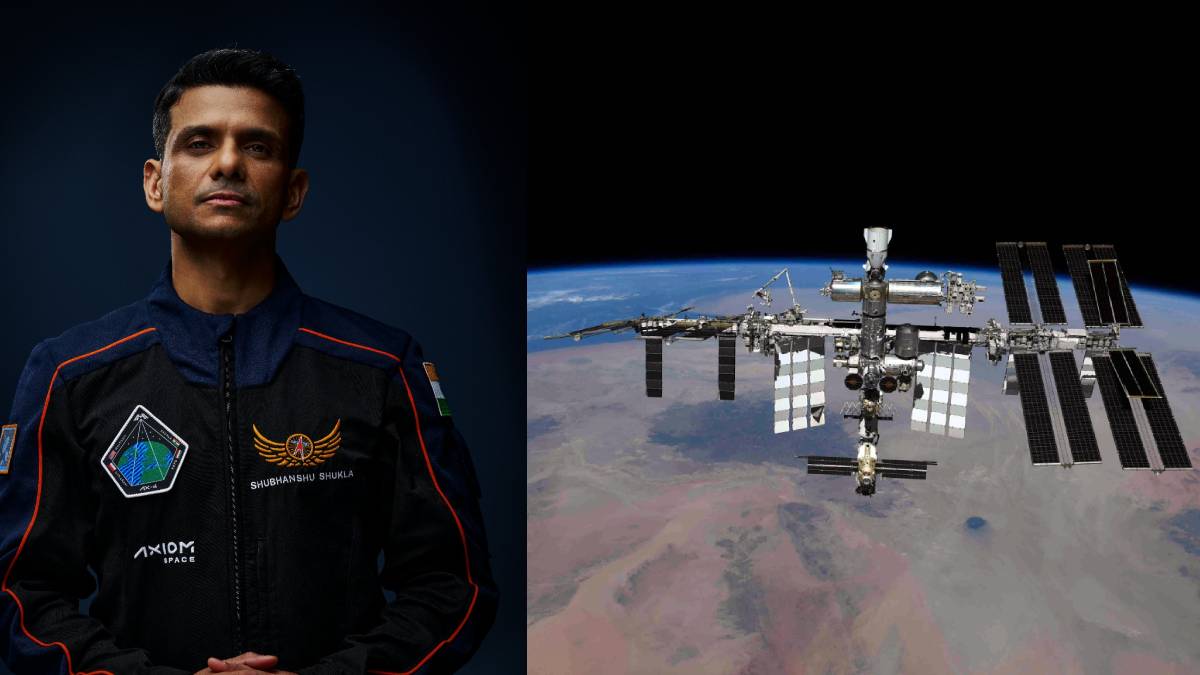
Después de hacer historia como el primer astronauta indio en formar parte de una misión a la Estación Espacial Internacional (ISS), el más reciente pionero espacial de la nación ha logrado un regreso exitoso a la Tierra. Este viaje, celebrado como un logro significativo en los crecientes esfuerzos de India por la exploración espacial, refleja la creciente influencia del país en la colaboración e innovación espacial a nivel mundial.
The astronaut, whose mission was part of an international partnership involving leading space agencies, spent several days aboard the ISS, where he took part in a range of scientific experiments and operational activities. His return marks not only the safe conclusion of a landmark flight but also a symbolic step forward in India’s ambitions to engage more deeply in crewed space missions and orbital science.
The mission has been closely followed in India, where public interest in space achievements has surged in recent years. From the successful Chandrayaan-3 lunar landing to expanding satellite deployment initiatives, the Indian Space Research Organisation (ISRO) has seen increasing global recognition for its cost-effective, high-impact contributions to space science. The addition of a crewed mission—especially one involving the ISS—adds a new dimension to this portfolio and signals India’s readiness to be a key player in international space cooperation.
During his stay aboard the ISS, the Indian astronaut participated in collaborative scientific research, focusing on microgravity’s impact on biological and physical systems. These experiments are expected to contribute to a broader understanding of how long-term spaceflight affects the human body, materials behavior, and other processes critical to future deep-space missions. Such data is particularly valuable as countries prepare for extended stays in orbit and upcoming missions to the Moon and Mars.
In addition to research duties, the astronaut also engaged in educational outreach, connecting with students in India via live video sessions from space. These moments, which captivated audiences nationwide, were designed to inspire interest in science, technology, engineering, and mathematics (STEM) fields among young people. The initiative has been praised for bringing the realities of spaceflight closer to everyday citizens and creating a sense of shared national pride in India’s scientific progress.
The training process for this mission was extensive and involved rigorous physical and technical preparation. Prior to launch, the astronaut underwent joint training with international astronauts at facilities in the United States and Europe. This preparation ensured a smooth integration with the station’s existing crew and allowed for meaningful participation in complex procedures during the mission.
India’s presence aboard the ISS comes amid broader discussions about the future of international space cooperation. With the ISS nearing the end of its operational life within the next decade, new platforms and partnerships are being considered to continue human activities in low-Earth orbit. India’s growing capabilities, both technical and human, position it as a valuable partner in these emerging frameworks. The experience gained from this mission could inform India’s contributions to upcoming initiatives such as NASA’s Lunar Gateway or other international orbital stations.
Back on Earth, the astronaut’s return involved a coordinated descent aboard a crewed capsule, which landed safely in a designated recovery zone. Medical teams were on standby to conduct post-landing evaluations and assist with the readjustment process, as returning astronauts typically require support while adapting to Earth’s gravity after prolonged exposure to microgravity conditions.
The successful touchdown was greeted with joy throughout India, as government representatives, researchers, and the public recognized the importance of the accomplishment. Executives from ISRO and India’s Ministry of Science and Technology issued comments lauding the astronaut’s efforts and the mission’s impact on international scientific understanding. The return is likely to be accompanied by a series of public events, briefings, and academic presentations designed to disseminate the mission’s results.
Looking ahead, India is set to expand its human spaceflight program under the Gaganyaan initiative, which aims to send Indian astronauts into orbit aboard domestically developed spacecraft. The recent ISS mission offers valuable experience in training, life support systems, and mission planning—all critical areas as the country moves toward independent crewed missions.
There are also plans to increase international collaboration in future space endeavors. As space becomes a more contested and complex domain, partnerships will be essential for managing shared challenges such as orbital debris, sustainable resource use, and peaceful exploration. India’s constructive role in this ISS mission strengthens its position as a reliable and capable partner in the next era of space exploration.
Beyond the achievements in science and strategy, the mission has left a significant cultural mark. The sight of an Indian collaborating with astronauts from around the world in space was inspiring and brought a sense of unity to many in India. It emphasized the potential of science and learning, showcasing the successes that can emerge from international partnerships aimed at common objectives.
In schools, universities, and science centers across the country, the mission has sparked renewed excitement about space science and aerospace careers. Educational institutions are already reporting increased interest in physics, astronomy, and engineering programs, a development that could have lasting benefits for India’s innovation ecosystem and workforce development.
As the pioneering Indian who resided and worked on the ISS makes his way back home, his mission is noteworthy not solely for its technological achievements but also for the new opportunities it creates for upcoming explorers. With increased funding, global cooperation, and heightened public interest, India’s space odyssey is set to embark on an exciting new chapter—one that extends beyond Earth’s orbit and motivates future generations.