

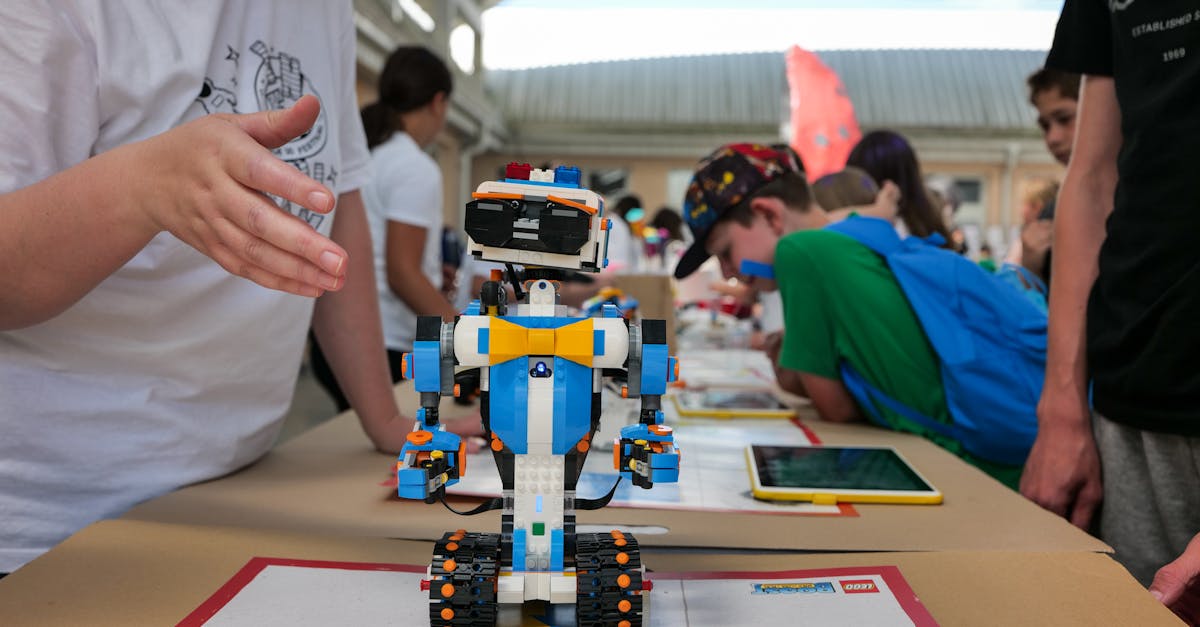
Robotics is moving from isolated automation toward systems that work alongside people, learn from data, and adapt to complex environments. Three categories dominate today’s conversation: humanoid robots, warehouse automation robots, and collaborative robots known as cobots. Each reflects different market needs, technological capabilities, and economic pressures. Understanding how these trends interact explains where robotics is heading and why investment and adoption are accelerating.
Humanoid Robots: Transitioning from Research Symbols to Real-World Trials
Humanoid robots are crafted to mirror human shape and motion, allowing them to function within environments created for people, and although they spent decades mostly limited to labs and staged showcases, new progress in artificial intelligence, sensing, and mechanical systems is steadily moving them toward practical, real‑world deployment.
Key drivers shaping humanoids
- AI foundation models: Vision-language-action systems enable humanoids to interpret directives, identify items, and carry out sequences of tasks without direct manual coding.
- Improved actuators and batteries: Advanced lightweight components and higher-efficiency motors boost maneuverability and extend operational duration.
- Labor substitution experiments: Companies are piloting humanoids for routine or physically demanding duties, including material movement and inspection work.
Examples and cases Numerous technology companies have demonstrated humanoids that can walk, pick up items, and carry out simple industrial functions. Automotive manufacturers have also trialed humanoids for internal logistics, including transporting containers or retrieving equipment. Although these initiatives remain small in scope, they highlight a strategic priority: employing a versatile robot form that can be reassigned to multiple duties without altering existing facilities.
Constraints Despite notable advancements, humanoids remain expensive, grapple with reliability issues, and encounter demanding safety certification requirements. Their adaptability is attractive, yet in many environments, dedicated robotic systems still exceed their performance in both cost and efficiency. Consequently, humanoids tend to influence long-range outlooks more than they affect immediate deployment numbers.
Warehouse Robots: The Backbone of Scalable Automation
Warehouse and fulfillment robots represent the most mature and economically proven segment of robotics. Driven by e-commerce growth, labor shortages, and demand for faster delivery, these systems are already transforming global supply chains.
Dominant trends in warehouse robotics
- Autonomous mobile robots: Fleets navigate dynamically using sensors and maps, reducing reliance on fixed infrastructure.
- Robotic picking and sorting: AI-powered vision systems now handle a wider variety of items, including irregular or fragile products.
- Warehouse orchestration software: Advanced control platforms coordinate hundreds or thousands of robots in real time.
Data and impact Major fulfillment centers often experience productivity boosts ranging from 20 to 40 percent once mobile robots are introduced for material transport, while order precision rises and employees shift from strenuous handling to supervisory and exception-focused duties, enabling high‑volume sites to recoup their investment in roughly two to three years.
Examples and cases Global retailers and logistics providers use robot fleets to move shelves, pallets, or totes. Parcel companies deploy automated sorting systems that process tens of thousands of packages per hour. These implementations demonstrate that warehouse robots are not experimental; they are core infrastructure.
Cobots: Collaboration as a Design Principle
Cobots are engineered to operate securely beside human workers without relying on cages or large protective barriers, and their rising adoption signals a move toward adaptable automation, particularly within small and medium-sized enterprises.
Why cobots are steadily growing in popularity
- Ease of deployment: Many cobots can be programmed through hand guidance or simple interfaces.
- Safety by design: Force limiting and sensor-based detection reduce the risk of injury.
- Task flexibility: Cobots can be redeployed for assembly, packaging, quality inspection, or machine tending.
Economic and social impact Cobots address labor gaps without requiring full automation. Manufacturers report reduced cycle times and improved consistency, while workers experience less physical strain. In sectors such as electronics, medical devices, and food processing, cobots support frequent product changes without costly retooling.
Examples and cases A small manufacturing plant may deploy cobots to assist with repetitive screwdriving tasks, allowing skilled workers to focus on quality control. In larger factories, cobots often operate in mixed lines, handing parts to human operators or performing inspections with machine vision.
Broad Trends Shaping Every Category of Robots
Although humanoids, warehouse robots, and cobots vary widely in design and purpose, a set of broader trends shapes each of them.
- AI-driven perception and learning: Robots are steadily shifting from rigid instructions to models that draw insights from extensive datasets.
- Cloud and edge computing: Blending instantaneous on-device decisions with centralized data processing enhances both scalability and overall efficiency.
- Workforce integration: Educational initiatives and thoughtful human-robot interaction planning are becoming just as crucial as the physical components.
- Regulation and safety standards: More detailed frameworks are speeding up deployment, especially for systems designed to collaborate safely with people.
Which Trend Is Shaping Robotics the Most?
Warehouse robots are redefining today’s landscape by delivering large-scale, quantifiable boosts in efficiency, while cobots are influencing how companies adopt automation by opening robotics to a wider range of organizations and employees. Humanoid robots, meanwhile, are steering the long-term vision with the prospect of versatile machines capable of operating within human-centered environments.
Taken together, these trends point to a multi‑layered robotics ecosystem rather than a single prevailing model, where specialized robots keep managing high‑volume tasks with strong efficiency, collaborative robots broaden adaptable automation, and humanoids shift slowly from trial phases to targeted real‑world use. The future of robotics is shaped less by any one design and more by how well machines embed intelligence, safety, and economic value within systems built around human needs.