In a globalized world dominated by low-cost manufacturing, one Oklahoma-based company is forging a different path, championing the revival of American-made denim. The company’s mission is a direct response to the widespread decline of the domestic textile industry, which has seen countless factories close and jobs move overseas. This commitment is not merely a business strategy; it is a foundational principle rooted in a belief that quality craftsmanship, ethical production, and support for the local economy can be a viable model in the modern market.
The tale of American denim is intricate, weaving together with the country’s industrial evolution. For years, the U.S. stood at the forefront of textile and apparel production. Renowned brands were crafted on American land, offering jobs to numerous proficient laborers. Nevertheless, from the late 1900s, an unyielding drive to cut expenses caused numerous firms to move their manufacturing abroad, causing a significant downturn in the national sector. This Oklahoma-based company is striving to counteract that pattern, producing one pair of jeans at a time.
The founders of the company were driven by a desire to create a product that was both authentic and enduring. They saw an opportunity to re-establish a legacy of American craftsmanship that had been largely lost. Their vision was to build a brand where every step of the process, from the sourcing of raw materials to the final stitch, was done within the United States. This philosophy forms the bedrock of their business model and sets them apart in an industry where “made in America” often refers only to the final assembly, not the entire supply chain.
The firm’s commitment to an entirely local supply chain is fundamental to its character. The production of their jeans starts with unprocessed cotton cultivated in the Southern United States. This cotton is subsequently transformed into yarn and crafted into denim material at a historic mill located in North Carolina, one of the few remaining. Even the tiniest elements, like rivets, buttons, and zippers, are acquired from American vendors. This careful consideration of each part’s source guarantees that the resulting product genuinely embodies its American-crafted pledge.
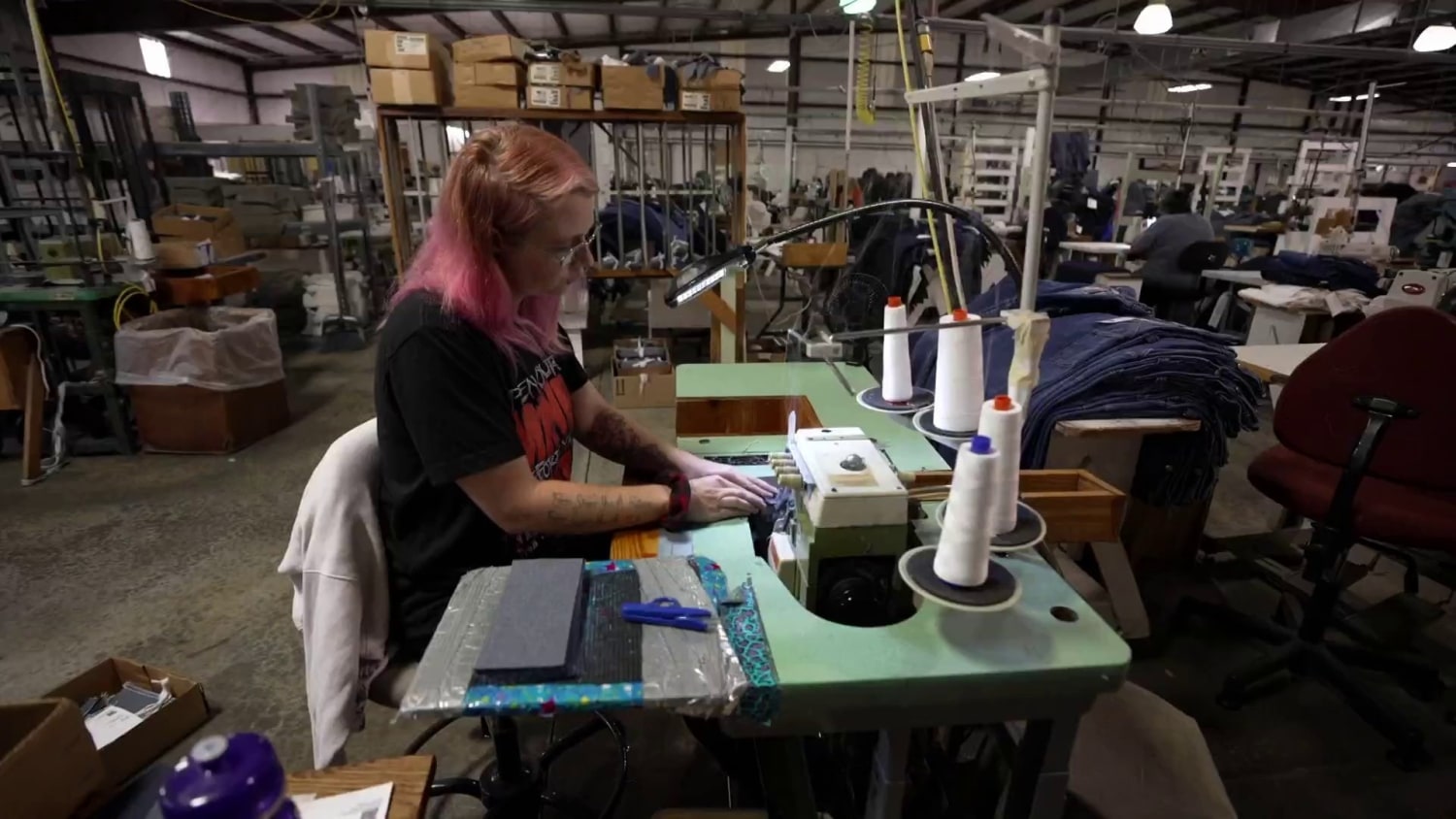
The process of production highlights the expertise and proficiency of U.S. workers. The firm employs a skilled group of craftsmen, many of whom have years of experience in the fabric sector. They utilize old-fashioned sewing machines and employ classic methods to guarantee excellent quality and robustness. This dedication to skillful work stands in sharp contrast to the assembly-line factories of the fast fashion industry, where efficiency and volume often come before precision and excellence.
The economic impact of this business model extends far beyond the factory floor. By choosing to produce locally, the company is directly creating jobs and supporting families in its home state of Oklahoma. The wages they pay are fair, and the working conditions are safe and ethical, a standard that is often not met in overseas production. This investment in the local community has a ripple effect, supporting other small businesses and contributing to the overall economic vitality of the region.
The organization’s approach to business, though commendable, does face certain obstacles. Expenses related to labor and materials in the United States are much greater compared to several other nations. As a result, their products are priced higher than those of their mass-produced rivals, potentially posing a challenge for some buyers. The company must continually validate its higher pricing by informing clients about the benefits of excellence, longevity, and responsible manufacturing. It is an ongoing struggle against a marketplace predominantly motivated by affordability and ease.
Nevertheless, an increasing portion of the consumer base is looking for products that have a meaningful narrative. These mindful buyers are ready to spend extra on goods that are produced ethically, are eco-friendly, and aid local markets. The Oklahoma denim manufacturer has seized this opportunity, garnering a dedicated customer base that aligns with their principles. Their achievement clearly shows that for a specific group, quality, openness, and an engaging brand narrative hold as much value as the cost.
The tale of the company serves as a motivating illustration of the slow fashion movement, which promotes the idea of purchasing fewer clothing items that are of higher quality and have greater durability. In a market flooded with textile waste, owning a sturdy pair of jeans that can be repaired represents a modest yet significant move towards a more sustainable future. This emphasis on endurance and classic style consciously opposes the throwaway nature of fast fashion, providing consumers with a more mindful and accountable approach to assembling their wardrobe.
Looking ahead, the company’s future looks promising. Their model has proven that a small, dedicated team can compete in a highly competitive market by focusing on a niche that values quality and authenticity. They have not only created a successful brand but have also provided a hopeful blueprint for others who want to revitalize American manufacturing. Their success is a powerful testament to the idea that with passion, skill, and a commitment to a greater purpose, it is possible to build a business that is both profitable and principled.
This Oklahoma denim-maker’s journey is a compelling narrative of defiance and determination. By choosing to craft every pair of jeans on American soil, they are not just creating a product; they are supporting a community, preserving a tradition, and challenging the status quo. Their success is a beacon of hope for American manufacturing and a powerful reminder that some of the most enduring stories are woven with thread, one stitch at a time.