
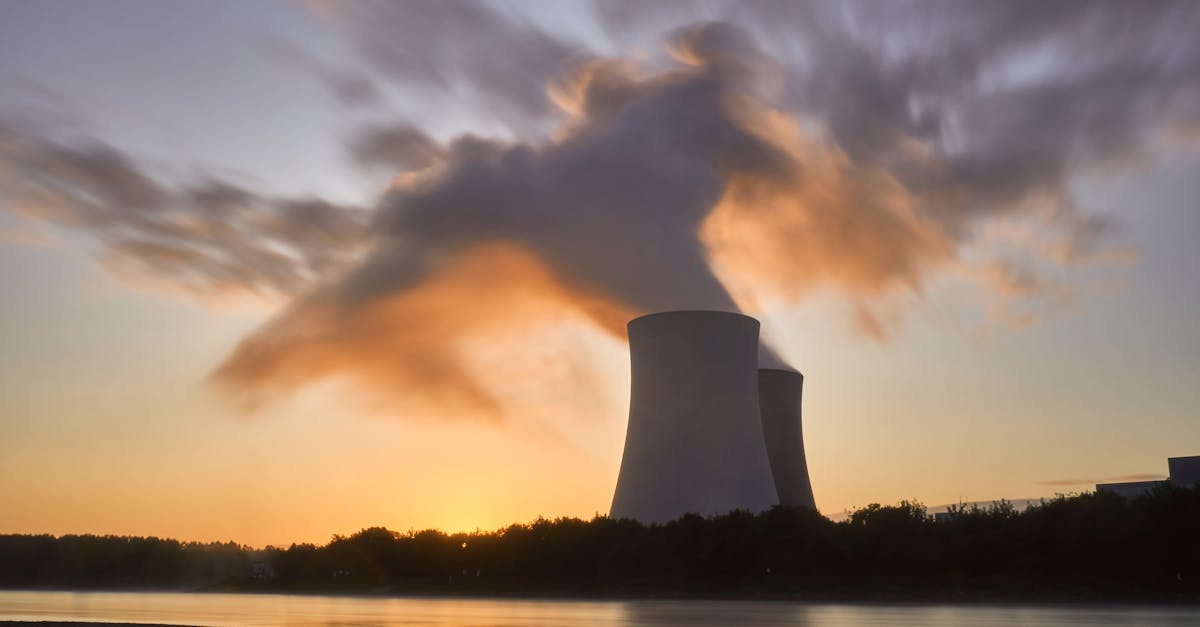
Nuclear power has once again moved to the forefront of global public and policy discussions, driven by a convergence of factors such as climate commitments, energy security needs, technological progress, market developments, and evolving public sentiment, shifting the conversation from ideological arguments to practical considerations about balancing deep decarbonization with dependable electricity generation.
Key drivers behind renewed attention
- Climate commitments: Governments and corporations pursuing mid-century net-zero goals increasingly require substantial volumes of dependable, low‑carbon power. With its almost negligible operational CO2 emissions, nuclear is positioned to deliver both baseload and adaptable electricity to advance the electrification of transport, industry, and heating.
- Energy security and geopolitics: The war in Ukraine and the resulting shocks to natural gas markets revealed critical weaknesses for nations dependent on energy imports. By cutting exposure to foreign fossil fuels and stabilizing prices, nuclear has encouraged policymakers across Europe and beyond to revisit strategic energy plans.
- Grid reliability with high renewables: As wind and solar deployment accelerates, system operators seek dispatchable, low‑carbon resources capable of supplying capacity and inertia. Nuclear’s strong capacity factor and steady generation make it a valuable counterbalance to intermittent renewables.
- Technological innovation: Emerging designs — including small modular reactors (SMRs), advanced Gen IV systems, and factory‑assembled units — offer prospects of reduced construction uncertainty, enhanced safety, and greater operational flexibility. This promise has captured interest from both investors and governments.
- Policy and finance shifts: Public investment, loan guarantees, tax incentives, and the inclusion of nuclear in clean‑energy classifications have lowered perceived risks. Several climate and stimulus initiatives now incorporate measures to advance nuclear development.
Climate backdrop and emission factors
Nuclear’s lifecycle greenhouse gas emissions are low compared with fossil fuels. Assessments such as the Intergovernmental Panel on Climate Change report median lifecycle emissions for nuclear power comparable to wind and much lower than coal or natural gas. For nations with ambitious decarbonization goals, replacing coal and gas-fired generation with nuclear can materially reduce emissions, especially where geological or land constraints limit renewables expansion or seasonal storage.
Economic realities: costs, financing, and markets
Costs and financing continue to sit at the heart of the discussion.
- High upfront capital: Large reactors typically demand major initial funding and lengthy build times, which can inflate financing expenses and heighten the likelihood of budget overruns.
- Variable LCOE estimates: The levelized cost of electricity for nuclear power spans a broad range, influenced by technology choices, project execution, regulatory conditions, and financing structures. While new facilities in established programs may remain competitive, ventures in regions with intricate permitting requirements or pioneering technologies have experienced significant cost increases.
- SMR promise: Small modular reactors seek to lower unit-level capital exposure by relying on factory production and modular installation. Supporters contend that SMRs can compress construction schedules and accommodate grids serving smaller population hubs or isolated industrial operations.
- Market design and revenue streams: Power markets that emphasize short-run marginal cost generation and maintain low wholesale prices can create uncertain revenue prospects for baseload nuclear plants. Capacity mechanisms, long-term agreements, carbon pricing, and government-supported power purchase arrangements can reshape investment incentives.
Safety, waste, and public perception
Safety and the management of radioactive waste continue to be the issues that elicit the most intense emotional responses.
- Safety improvements: Modern designs incorporate passive safety systems and simplified operation to reduce accident risk. Lessons from Three Mile Island, Chernobyl, and Fukushima have led to stricter regulations and design changes.
- Waste solutions: Technical options for spent fuel and high-level waste include deep geological repositories. Operational examples include Finland’s Onkalo repository program, which is a widely cited real-world project for long-term disposal.
- Public sentiment: Public opinion has shifted in some regions due to energy price spikes and climate concerns; surveys in several countries show rising support for nuclear as a low-carbon firm power source. However, opposition persists in others because of safety, cost, and proliferation worries.
Remarkable national examples and initiatives
- China: Rapid deployment program: aggressive build-out of both large reactors and demonstration SMRs. China leads in new capacity additions and standardized construction practices that have lowered delivery times.
- United Arab Emirates: Barakah Nuclear Energy Plant demonstrates successful delivery of modern large reactors in a newcomer country. The project showed that countries with strong project management and financing can complete complex builds.
- Finland: Olkiluoto 3 (EPR) experienced long delays and cost disputes but ultimately began commercial operation, while the Onkalo repository project is pioneering spent fuel disposal.
- United States: Vogtle units illustrate both the difficulties of large reactor projects and the policy response: federal loan guarantees, regulatory support, and later-stage subsidies and tax incentives to complete projects and support advanced reactors.
- United Kingdom and France: France has announced plans to build new reactors to reaffirm its low-carbon generation base; the UK government has revived support for nuclear as part of energy security and industrial strategy.
Cutting-edge technologies and emerging directions
- SMRs and modular manufacturing: Several vendors target commercial SMR deployment in the 2020s and 2030s. Advantages include reduced onsite labor, staged capacity additions, and suitability for markets with smaller grid systems or industrial heat needs.
- Next-generation reactors: Molten salt reactors, high-temperature gas-cooled reactors, and fast reactors offer potential benefits such as higher thermal efficiency, improved fuel utilization, and reduced long-lived waste, though most remain at demonstration stage.
- Hybrid energy systems: Nuclear paired with hydrogen production, industrial heat, or grid-scale storage could broaden economic uses for reactors beyond electricity and support hard-to-abate sectors.
Policy and regulatory considerations
Successful nuclear deployment depends on coherent policy frameworks: predictable permitting timelines, clear waste management strategies, stable revenue mechanisms, and international cooperation on safety and non-proliferation. Governments balancing near-term energy security with long-term decarbonization must weigh subsidies, market reforms, and risk-sharing arrangements to attract private capital.
Risks and trade-offs
- Construction risk: Large projects can face schedule delays and cost overruns that undermine competitiveness.
- Opportunity cost: Capital directed to nuclear could alternatively accelerate renewables, storage, and grid upgrades; the optimal mix depends on local resources and timelines.
- Proliferation and security: Expansion of civil nuclear programs requires stringent safeguards and security measures to prevent diversion and to protect facilities.
The return of nuclear energy to mainstream debate reflects a pragmatic recalculation: countries must meet ambitious decarbonization goals while keeping grids reliable and economies secure. Nuclear is not a single, monolithic choice but a portfolio of options — from large reactors to SMRs and advanced concepts — each with distinct benefits and challenges. Where policy, public support, financing, and regulatory regimes align, nuclear can play a major role in lowering emissions and strengthening energy independence. Where those elements are absent, other clean technologies may advance more quickly. The enduring question for policymakers and societies is how to balance speed, cost, safety, and long-term environmental responsibility to build energy systems that are resilient, equitable, and consistent with climate targets.