Blog

What happens when countries restrict food exports

What happens when countries restrict food exports

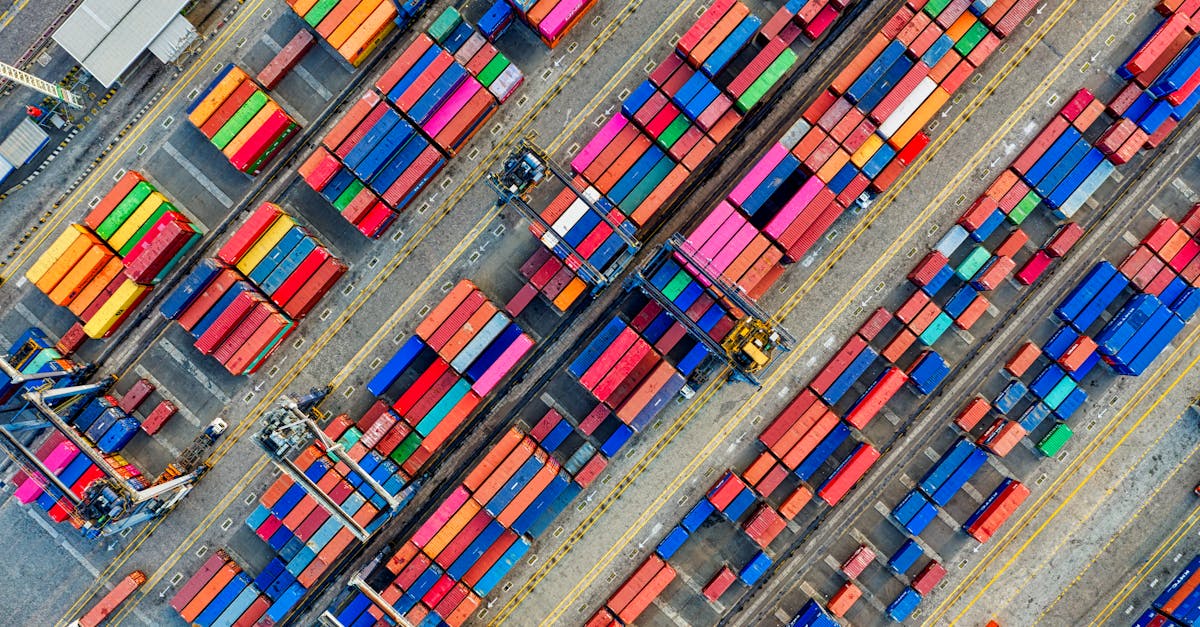
When a country restricts exports of staple foods or key agricultural inputs, the effects ripple across markets, households, governments, and international relations. Export restrictions include outright bans, export licensing, higher export taxes, quantity quotas, and administrative delays. These measures are often intended to protect domestic consumers or stabilize local prices, but they also create consequences that extend beyond national borders and beyond the short term.Mechanisms and Their Prompt Market ImpactReduction in global supply: When one or several exporters curb their outgoing shipments, the overall volume available worldwide declines, and for commodities with tight supply-demand balances, even slight cutbacks can push…
Read More
Why biodiversity is an economic security issue

Biodiversity Loss: A Threat to Economic Security

Biodiversity — the variety of life across genes, species and ecosystems — is not an environmental abstract reserved for scientists and conservationists. It underpins the goods, services and resilience that modern economies depend on. When biodiversity declines, the effects cascade through supply chains, public budgets, corporate balance sheets and national stability. Treating biodiversity as an economic security issue reframes it from a conservation priority to a fundamental component of national and global economic resilience.How biodiversity links to economic securityProvisioning services and supply chains. Biodiversity delivers essential resources including food, timber, medicinal compounds, fibres and genetic materials. Agricultural productivity, fisheries performance…
Read More
What critical minerals are and why they’re contested

Why Critical Minerals Are So Hotly Contested

Critical minerals are naturally occurring elements and compounds on which modern economies rely for manufacturing, the energy transition, and defense, yet their supply chains often remain fragile or highly concentrated. Governments and analysts generally evaluate how critical a mineral is by considering two main factors: its economic significance to essential technologies and the likelihood that its supply could face disruptions. This combination of strong demand and elevated exposure to supply risks is what classifies a mineral as “critical.”Why they matter nowThe global shift to electrification, renewable energy, digital infrastructure, and advanced defense systems has multiplied demand for certain minerals. Lithium,…
Read More
Qué es un mercado de carbono y por qué genera polémica

Deciphering Carbon Capture’s Impact

Carbon capture represents not one technology or policy but a broad set of methods that extract carbon dioxide from flue gases or directly from the atmosphere and then either store it permanently underground, channel it into products, or inject it in ways that hold CO2 only for limited periods. Its value or harm depends on factors such as intent, timing, scale, governance, and economic viability. The following is a concise evaluation of the situations in which carbon capture serves as a useful instrument and those in which it poses risks of delay, inefficiency, or greenwashing.How carbon capture can make a…
Read More
Why regulating social media is so hard globally

The Struggle for Global Social Media Governance

Social media platforms mediate information, politics, commerce, and private lives across borders. Regulating them is not simply a matter of drafting rules; it involves reconciling competing legal systems, technical limits, economic incentives, political power, cultural differences, and operational realities at an unprecedented global scale. Below I map the core challenges, illustrate them with cases and data points, and sketch pragmatic directions for progress.1. Scale and Technical ConstraintsSheer volume: Platforms host billions of users and process billions of posts, messages, images, and videos every day. Automated systems help, but human review remains necessary for nuanced decisions. This scale amplifies the cost…
Read More
Why food security remains fragile

Understanding Vulnerable Food Systems

Food security is the condition in which all people, at all times, have physical and economic access to sufficient, safe, and nutritious food. Despite progress in agricultural productivity and declining child mortality in some regions over recent decades, global food security remains fragile. Multiple interacting drivers — environmental, economic, political, social, and technological — continuously undermine availability, access, utilization, and stability of food supplies. The following analysis explains the main causes, illustrates them with cases and data trends, and highlights practical pathways to reduce fragility.Fundamental factors behind fragilityConflict and instability: Armed conflict is the single largest driver of acute food…
Read More
Iranians confront a post-Khamenei reality with relief, disbelief and anxiety

Life After Khamenei: Relief, Disbelief, and Unease

For the first time in decades, Iranians woke to a country without Ayatollah Ali Khamenei as supreme leader, following his death in coordinated US-Israeli strikes. The nation now confronts a period of deep uncertainty.Mixed reactions across the countryThe news of Khamenei’s death has triggered a broad array of reactions throughout Iran, where residents in the capital and other major cities voiced restrained optimism, seeing the conclusion of his decades-long leadership as a moment that might reshape the country’s future. In several districts, impromptu celebrations broke out as crowds honked car horns, waved garments, and even pulled down monuments linked to…
Read More
How shared river agreements prevent conflict

Conflict Prevention Through Shared River Management

Rivers cross political borders more than any modern idea of territory can contain. More than 150 countries share transboundary river basins, and well over 260 international river and lake basins drain across political boundaries. When water is scarce or unevenly distributed, competition can escalate into political tension or even military posturing. Conversely, well-designed shared river agreements act as instruments of cooperation, turning a potential flashpoint into a platform for stable, mutually beneficial management. This article explains how and why these agreements prevent conflict, with examples, data, and practical lessons.Primary hazards linked to unregulated transboundary riversUncoordinated use of a shared river…
Read More
The dilemmas of content moderation online

Navigating the Difficulties of Online Content Moderation

Online content moderation sits at the intersection of technology, law, business incentives, and human values. Platforms must balance the protection of users from harm with respect for free expression, operate across thousands of jurisdictions, and make split-second decisions at a scale of millions or billions of posts. The result is a set of persistent dilemmas: what to remove, what to label, how to enforce rules consistently, and who decides.Key dilemmas clarifiedSafety versus free expression. Strict enforcement can curb harms tied to harassment, hate, and misinformation, yet it may also sweep up valid political conversations, satire, or voices from marginalized groups.…
Read More
Who controls data and why that equals power

The Data Controllers: Masters of Power

Data is far from neutral or merely raw; it functions as a strategic resource. The party that gathers, stores, interprets, and oversees extensive, high‑quality datasets secures economic leverage, political sway, and operational authority. That concentrated ability to anticipate behavior, influence markets, guide information flows, and execute large‑scale decisions is what ultimately transforms data into power.Key actors who control dataBig technology platforms: Companies spanning global search, social networks, cloud ecosystems, and ecommerce services accumulate vast volumes of behavioral, transactional, and location-based information derived from billions of users and activities.Governments and regulators: States gather identity, taxation, health, telecom, and surveillance records, while…
Read More