

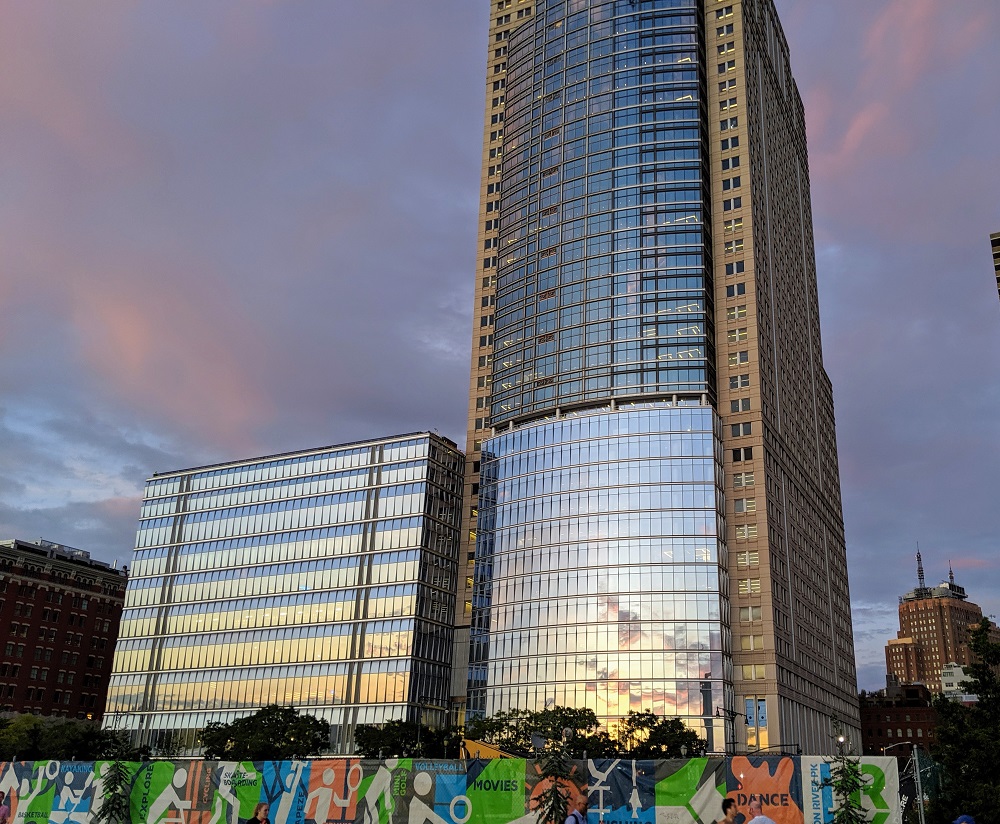
The story of the Citicorp Center skyscraper, a New York landmark with a hidden and near-fatal design flaw, serves as a powerful testament to the critical role of human integrity and expertise in the world of engineering. For decades, the public was unaware that one of the city’s most recognizable buildings was, in fact, an impending catastrophe waiting for the right storm to strike. This chilling secret was known by only one person, an engineer whose unwavering ethical compass ultimately saved countless lives. The narrative is a compelling blend of design hubris, mathematical precision, and the quiet heroism of a professional who put public safety above all else.
The most praised aspect of the building was its avant-garde design. Constructed in the mid-1970s, the Citicorp Center represented an engineering feat, marking a significant shift from traditional skyscraper building techniques. It was elevated on four enormous stilts at each corner, each rising nine stories high, a decision reached to allow a new church to occupy a spot on the block. The tower seemed to hover above the street, perched on these stilts. This one-of-a-kind structure, which resulted from a compromise with the church to maintain its original setting, was celebrated for its imaginative and bold architectural approach. The design was considered a victorious instance of form following function, where a seemingly unsolvable issue was addressed with an ingenious and non-traditional approach.
However, a crucial miscalculation lay hidden within this revolutionary design. A young civil engineering student, while working on a school project, began to question the building’s structural integrity. Her analysis, based on a theoretical paper, suggested that the skyscraper was vulnerable to quartering winds—those that hit the building at a 45-degree angle. The standard practice for structural calculations had always been to test for winds hitting head-on, at 90 degrees. This quartering wind scenario, considered a statistical anomaly, was not part of the building codes or standard industry practice at the time. Yet, the student’s research showed that under this specific load, the unique geometry of the building’s bolted joints could be pushed beyond their breaking point.
Upon learning about the student’s discoveries, the original engineer responsible for the skyscraper’s design, a talented and esteemed professional named William LeMessurier, took her observations to heart. Known for his careful attention to detail, LeMessurier independently verified the calculations. To his dismay, he found the student was indeed right. He had designed a structure with a significant vulnerability, posing a one-in-sixteen likelihood of catastrophic collapse should a severe hurricane hit New York City. This realization was a profound shock, leading to both a personal and professional crisis that he endured alone. He faced an intense moral conflict: remain quiet and risk a public disaster, or speak up and jeopardize his reputation, his career, and the financial stability of his firm.
LeMessurier opted for a path marked by integrity and accountability. He resolved not only to notify his clients and the city’s building department but also to accept full responsibility for the mistake. This bold action initiated a covert, continuous operation to fortify the structure. Under the veil of night, teams welded large steel plates onto each of the tower’s 200 bolted joints. The procedure was painstakingly slow and hazardous, yet it was essential to keep it confidential to prevent public alarm and protect the building’s reputation. The public explanation was that the crews were conducting regular maintenance, a fiction that permitted the work to advance smoothly.
The reinforcement initiative was a battle against the clock. Hurricane Ella, a formidable storm, was progressing along the East Coast. As the hurricane advanced, LeMessurier collaborated with government officials to prepare for a possible evacuation, a backup plan that, thankfully, never needed to be executed. The storm turned out to sea, and the discreet repairs were finished without the public ever realizing the peril they had been in. The tale of the Citicorp Center stayed concealed for almost twenty years, only becoming known when a journalist discovered the specifics. LeMessurier, who had retired, was finally able to recount the entire narrative of his choice, solidifying his legacy not only as a skilled engineer but also as a genuine professional who embodied the highest ethical standards.
The tale of the Citicorp Center is a valuable lesson in the importance of structural integrity and the ethical responsibility of those who design the buildings we inhabit. It underscores the fact that even the most brilliant minds can make mistakes, and that the true measure of a professional is how they respond to them. William LeMessurier’s actions stand as a monument to the principle that public safety must always come before personal gain or professional pride.
His bravery in confronting the results of his mistake and taking firm action to rectify it is a strong reminder that the structures forming our urban landscapes are more than just steel and glass edifices; they mirror the honesty of the individuals constructing them. This story has been employed as an educational resource in engineering schools for years, acting as a compelling example of ethics and a warning about the significance of double-checking one’s efforts.