

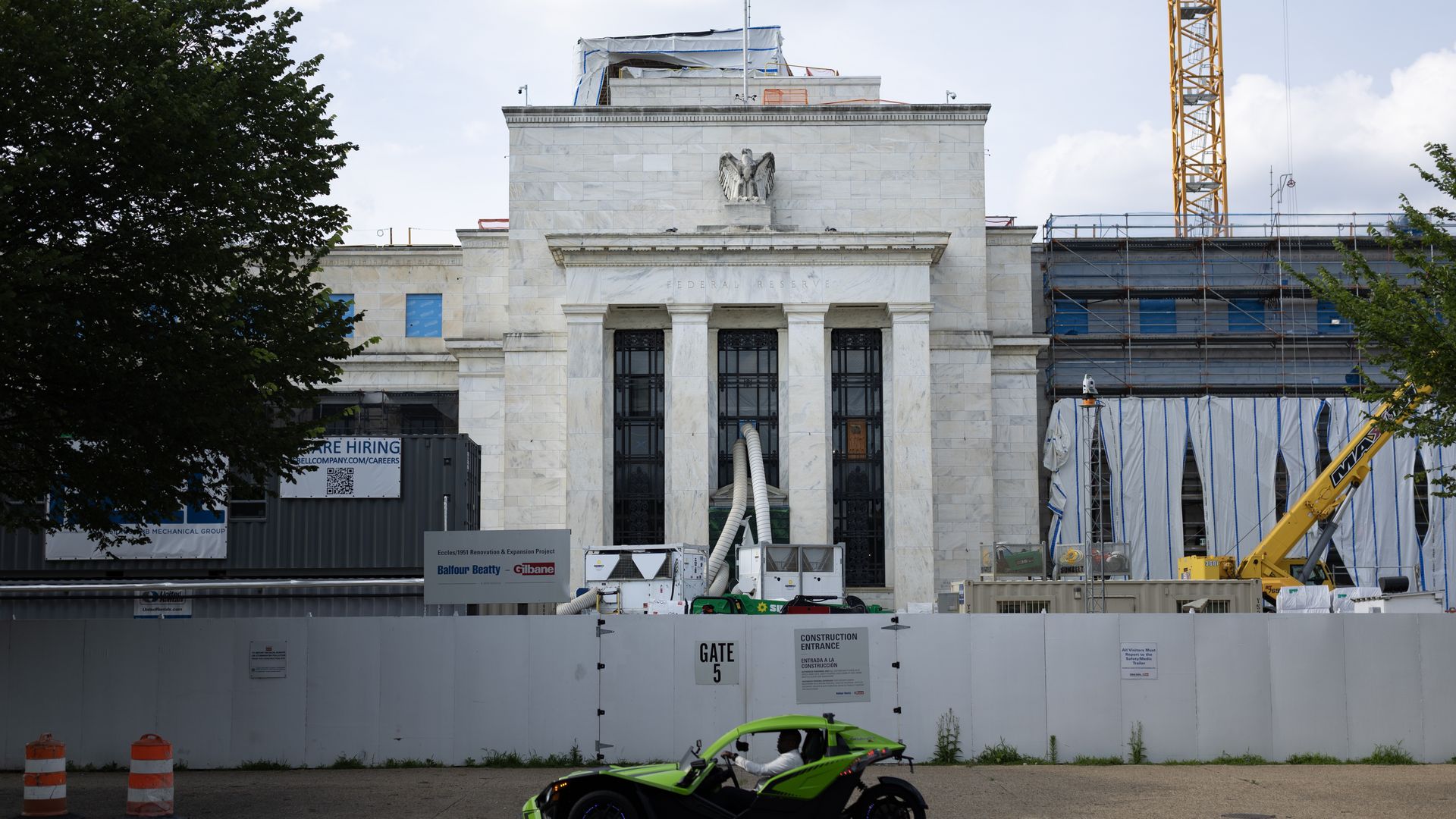
Federal Reserve Chair Jerome Powell has requested an internal investigation into a multibillion-dollar construction project at the central bank’s headquarters, following public criticism and political pushback—most notably from former President Donald Trump. The $2.5 billion renovation of the Fed’s main building in Washington, D.C. has drawn scrutiny over its cost and necessity, prompting Powell to refer the matter to the agency’s Office of Inspector General (OIG) for independent evaluation.
The renovation in question involves a substantial overhaul of the historic Eccles Building, which has housed the Board of Governors of the Federal Reserve since 1937. The project aims to modernize the facility, address longstanding structural issues, improve security, and expand office space to accommodate additional staff. However, the scale and projected cost of the undertaking have sparked criticism from some lawmakers and public figures who argue that the expenditure may be excessive, especially during a period of heightened attention to government spending.
By requesting the OIG review, Powell is signaling a willingness to subject the central bank’s internal decisions to independent scrutiny. The move reflects the Fed’s interest in maintaining transparency and public trust, particularly at a time when the institution is under pressure from multiple sides—including political figures and segments of the public who are questioning its policy choices, role in the economy, and institutional independence.
According to Fed officials, the renovation project has been in planning for years, and the price tag has grown due to inflation, post-pandemic construction cost increases, and new requirements related to workplace safety, environmental efficiency, and modernized technology infrastructure. The building’s last major update occurred decades ago, and its current infrastructure is reportedly outdated and insufficient to meet the operational needs of a modern central bank.
Ex-President Trump, alongside others, has expressed significant resistance to the project, describing the renovation as excessive and unwarranted. He has incorporated this topic into a wider criticism of the Federal Reserve’s leadership and policies, accusing them of being disconnected from ordinary Americans and careless with public funds.
In reply, Powell’s choice to pursue an independent evaluation might fulfill several goals: strengthening the organization’s trustworthiness, explaining the cost determination process, and possibly spotting areas where expenditures could be reduced or optimized. The Inspector General’s assessment will probably concentrate on acquisition procedures, financial oversight, and compliance with existing federal standards for major governmental construction initiatives.
While the Federal Reserve functions independently from both the executive and legislative branches, it remains accountable to Congress as well as the public. Its finances do not stem from taxpayer money in the usual manner; instead, it is supported by its own revenues, mostly derived from interest on government securities. However, the perception of undertaking a multibillion-dollar renovation in an economically sensitive period can impact public opinion and political discourse.
The leadership at the Fed has emphasized that the refurbishment is crucial for the building to meet the demands of an expanding and changing workforce. They point out that this initiative comprises seismic strengthening, modernizing antiquated electrical and plumbing systems, enhancing accessibility, and implementing measures to boost environmental sustainability following federal standards.
The analysis conducted by the Inspector General may require several months to finalize, contingent on its breadth and the depth of analysis needed. Upon conclusion, the outcomes might either affirm the Federal Reserve’s strategy or propose adjustments to the blueprint. Regardless of the results, they are anticipated to influence how both the public and Congress view the central bank’s financial stewardship and operational methods.
This instance arises during wider discussions regarding the Federal Reserve’s involvement in the United States economy. With ongoing debates concerning inflation worries, interest rate decisions, and financial oversight, the central bank is subjected to continuous examination from various political viewpoints. The renovation dispute introduces an additional aspect to these discussions, shifting focus from monetary policy to the governance of institutions.
Transparency advocates have welcomed Powell’s decision to seek a review, describing it as a step toward greater accountability. They argue that while the Fed is not directly funded by Congress, it still holds a position of immense public responsibility and must exercise prudence in its financial decisions. Independent oversight, they say, is a crucial mechanism for building trust in public institutions.
Some experts in federal property management have noted that large-scale government renovations are inherently complex and often expensive due to the need to preserve historical elements while meeting modern standards. The Eccles Building, being listed on the National Register of Historic Places, is subject to additional preservation requirements, which may have contributed to the rising costs.
While focus continues to center on the cost of the renovation, Powell’s leadership is expected to face challenges not just in guiding monetary policy but also in handling institutional responsibility. Managing operational requirements alongside fiscal discipline will be crucial to maintaining the Fed’s public trust.
The decision by Chair Jerome Powell to initiate an Inspector General review of the $2.5 billion headquarters renovation underscores the Federal Reserve’s acknowledgment of public concern and its commitment to transparency. The outcome of the review will have significant implications not only for the future of the construction project but also for the Fed’s broader relationship with Congress, the public, and political leaders amid a dynamic and often contentious economic environment.




.jpg "Investing in Residential Projects in Panama in 2026")